


Executive Summary
The Snowflake versus Databricks decision is often presented as a technology comparison. Which platform is faster? Which one is cheaper? Which has better AI capabilities? Which is easier to govern? Which one is better for genomics, clinical data, real-world evidence or enterprise analytics? These questions are useful, but they can lead organizations toward the wrong decision if they are asked before the underlying workload has been understood.
For life sciences organizations, platform selection is rarely just a question of technical capability. A pharmaceutical or biotechnology company may simultaneously need to process genomic sequences, integrate clinical-trial data, analyze real-world evidence, support commercial reporting, run machine-learning models, share information with research partners and maintain controls over highly sensitive or regulated information. Those workloads do not have the same data characteristics, compute requirements or operating models. A platform that is an excellent fit for one may be unnecessarily complex for another.
The historical distinction between the two platforms provides a useful starting point. Databricks emerged from the Apache Spark ecosystem and built its platform around large-scale data engineering, distributed processing, data science and the lakehouse model. Snowflake established itself around a highly managed cloud data platform with strong SQL analytics, elastic compute, governance and data sharing. Those differences still influence platform selection, even though the products have converged considerably. Databricks has expanded into SQL analytics, governance and enterprise AI, while Snowflake has expanded into Python, machine learning, AI and broader support for semi-structured and open data architectures. IntuitionLabs’ 2026-updated comparison similarly describes Databricks as particularly suited to flexible multimodal workloads such as genomics and imaging, while Snowflake has a strong position in high-performance SQL analytics and cross-organization data sharing.
This convergence actually makes the decision more strategic. Organizations can no longer rely on a simple “warehouse versus lakehouse” distinction. Instead, they need to understand where the center of gravity of their data estate sits.
If the primary problem is consolidating structured enterprise data, enabling thousands of users to run governed SQL analytics and allowing business units to share trusted information without repeatedly copying datasets, Snowflake can be a natural fit; Pfizer provides a useful example of that pattern.
The center of gravity looks different for organizations whose data estate is dominated by large-scale scientific processing, multimodal information and machine learning. AstraZeneca provides a useful example of the scale and complexity of this challenge.
The decision becomes even more complicated in regulated environments because platform architecture affects the operating model around the technology. Governance, lineage, validation, access control, auditability, talent, data sharing and long-term interoperability all influence the real cost of a platform. A technically capable platform can become expensive if it requires unnecessary data movement, duplicate pipelines or specialized skills that are difficult to scale.
The right question is not “Which platform is better?” The better question is: Which platform should perform which workloads, under which controls, with which skills, and at what total cost? That shift turns the Snowflake-versus-Databricks debate from a product comparison into an architecture decision.
620,000× Increase in genomic data volume in a cited public-repository comparison, 2007 to 2024. IntuitionLabs | 57% Reported reduction in Pfizer’s total cost of ownership after migrating to Snowflake. Snowflake customer case study | 1.7M+ Human genomes with matched clinical insights currently supporting AstraZeneca’s genomics research. AstraZeneca, Centre for Genomics Research |
“The right data platform is not the one that wins the feature comparison. It is the one that fits the workload, operating model and regulatory reality of the organization.”
Why the Decision Is No Longer Simply Snowflake vs. Databricks
The first mistake organizations make is treating the platform as the starting point. In practice, the platform is only one layer of a much larger system. Before an organization decides where its data should live, it needs to understand what that data looks like, who uses it, how frequently it changes, how much processing it requires and what controls need to surround it.
A typical pharmaceutical organization illustrates the problem. Clinical data may arrive from electronic data capture systems, laboratories and clinical-trial partners. Real-world evidence may include claims, EHRs and other external sources. R&D may generate genomic sequences, imaging, assay results, compound information and experimental observations. Commercial teams may work with CRM, prescription, market-access and field-force data. Manufacturing and supply-chain teams generate another set of operational datasets. Trying to force all of these workloads into a single pattern can create unnecessary compromises.
The important change is that Snowflake and Databricks themselves have moved closer together. Snowflake is no longer simply a conventional cloud warehouse. Databricks is no longer simply a Spark environment for engineers. Both increasingly provide data engineering, governance, AI/ML and analytics capabilities. The decision has therefore moved from “warehouse or lakehouse?” toward “which operating model best fits the workload portfolio?”
This is consistent with the broader direction of life sciences data architecture. EPAM’s 2025 analysis of R&D data platforms argues that the industry’s AI challenge is fundamentally a data challenge: research data remains fragmented, difficult to find and often trapped in incompatible systems. Its recommendations include interoperable data architectures, metadata management, reusable data services and platforms capable of supporting both Snowflake and Databricks-style workloads. The technology is converging. The workloads are not.
The Factors That Actually Drive the Decision
- Start With the Workload, Not the Platform
The most reliable platform decisions begin with a workload inventory rather than a vendor demonstration. Organizations should identify the major analytical workloads across R&D, clinical development, commercial operations, real-world evidence, manufacturing and enterprise functions. They should then ask what each workload actually requires.
A commercial dashboard may involve highly structured data, predictable SQL queries and thousands of concurrent users. A genomic workflow may involve enormous files, distributed processing, specialized scientific libraries and machine-learning pipelines. A clinical-trial analytics workload may require a mixture of structured datasets, controlled access and reproducible transformations. An AI application may need to combine structured patient information with unstructured clinical documents. These are fundamentally different computational problems.
Snowflake’s architecture can be particularly attractive where the workload is dominated by structured analytical access. Its separation of storage and compute allows organizations to create independent compute resources for different workloads, while its managed architecture reduces the amount of infrastructure that teams need to operate themselves. Its data-sharing capabilities are also relevant when information needs to move across organizational boundaries without creating uncontrolled copies. Databricks becomes particularly attractive when data engineering and advanced analytics are closely connected. Spark-based distributed processing, notebooks, machine-learning tooling and lakehouse patterns make it natural for teams that need to transform large or complex datasets before they become analytical products. The distinction is not absolute. Both platforms can increasingly perform both types of work. The question is where each platform creates the least friction.
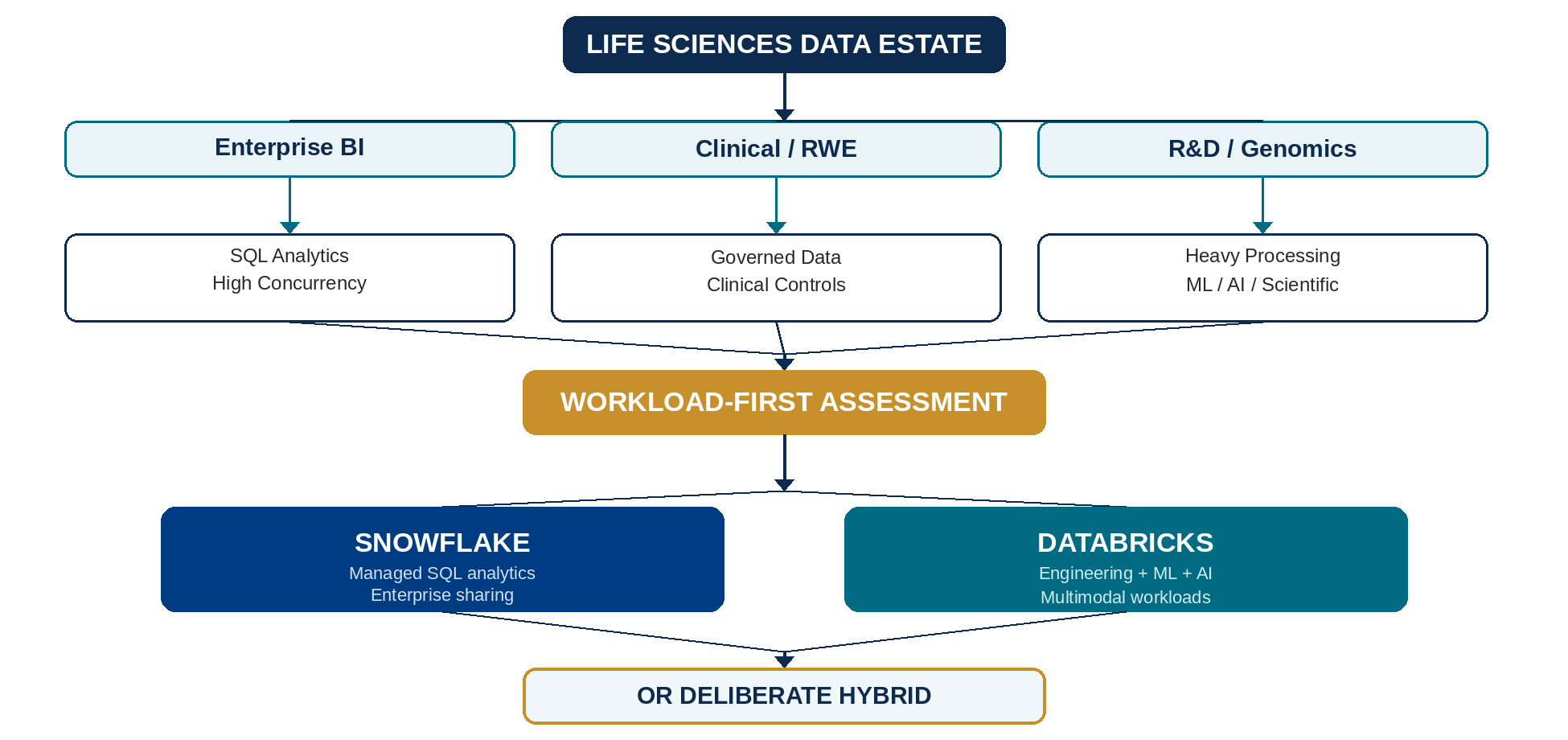
Figure 1: Workload-first platform selection in life sciences
The purpose of a workload map like this is not to force every workload into one box. It is to expose where the organization’s actual needs sit.
- Structured Enterprise Analytics Can Create a Natural Snowflake Advantage
Snowflake tends to become particularly compelling when the organization is trying to solve an enterprise analytics problem. Consider a global pharmaceutical company with commercial, manufacturing, supply-chain, finance and field organizations operating across multiple countries. The challenge may not be the ability to process raw scientific data. The challenge may be making sure that thousands of employees can access consistent information without creating hundreds of competing versions of the truth. This is where concurrency and simplicity matter: if one team is running a commercial report while another performs supply-chain analysis and a third queries clinical metrics, the platform needs to provide predictable performance without requiring each team to manage its own infrastructure.
Snowflake’s separation of storage and compute is designed around this type of workload. Pfizer provides a useful illustration: its migration consolidated enterprise data and supported governed sharing across business units and geographies.
The important lesson is not that Snowflake is universally cheaper or faster. It is that this example reflects an underlying problem closely aligned with Snowflake’s strengths: fragmentation, concurrency, enterprise access and governed sharing.
- Databricks Becomes More Natural When Data Engineering and AI Are at the Center
The decision often moves toward Databricks when the organization’s biggest challenge is transforming complex data into something that can be analyzed or used by AI. This is particularly visible in R&D. Modern drug discovery can involve genomic data, transcriptomics, proteomics, imaging, assay data, scientific literature, compound information and clinical observations. Much of this data does not arrive in a clean relational structure; it needs to be transformed, standardized and connected before it becomes useful. A platform designed primarily around SQL analytics can certainly participate in that workflow, but an engineering-centric lakehouse can feel more natural when the transformation itself is a major part of the work.
AstraZeneca illustrates why this matters. Its Centre for Genomics Research now works with more than 1.7 million genomes and matched clinical insights, with genomic and multi-omic information being used to support drug discovery and development, and the company reports more than 80 pipeline decisions supported by its human-genetics research since 2017. At this scale, the platform is not simply answering questions about already-curated data: it is part of the machinery used to turn enormous volumes of scientific data into research-ready information. Databricks’ positioning around distributed processing, data engineering and machine learning fits naturally into this environment. Its life-sciences materials describe applications spanning genomics, clinical data and real-world evidence, while IntuitionLabs identifies multimodal workloads such as genomics and imaging as areas where Databricks can have a natural advantage.
There is an important nuance, however. Large-scale scientific processing does not automatically mean Databricks should own the entire data estate. The outputs of scientific pipelines may eventually become highly structured datasets consumed by analysts, commercial teams or clinical operations, and that is where a platform such as Snowflake can still have an important role. The workload boundary matters more than the brand boundary.
- The Talent Model Can Decide the Outcome
A data platform is ultimately operated by people. This sounds obvious, but it is frequently overlooked during technology selection, as organizations often compare architectural diagrams while paying insufficient attention to whether their workforce can operate those architectures efficiently. A SQL-heavy organization may have hundreds of analysts and data engineers who are comfortable with relational data, ELT pipelines and BI tools, and for such an organization a managed analytics environment can reduce friction. A research organization may have a very different talent profile, with teams of Python developers, data scientists, bioinformaticians, machine-learning engineers and researchers working in notebooks, for whom an engineering- and ML-oriented environment can feel more natural. Neither workforce is inherently better; the issue is organizational fit.
This becomes particularly important in life sciences because platform skills often overlap with domain knowledge. A data engineer who understands clinical-trial structures is more valuable than someone who understands the platform but not the scientific process, and a machine-learning engineer working with genomics needs to understand not only distributed computing but also the biological meaning of the data. Organizations should therefore assess three things before selecting a platform: what skills do we have today, what skills can we realistically hire, and what skills will our future operating model require. The practical decision rule is to select an architecture whose required skills are already available or realistically recruitable, and to make any training or hiring needed for the target operating model an explicit part of the business case.
- Governance Changes the Decision in Regulated Environments
Governance is where a seemingly simple platform comparison becomes much more complicated. In regulated life sciences, it is not enough to say that a platform supports encryption, role-based access control or audit logs. The organization must demonstrate that the complete data lifecycle is controlled: where did the data originate, who changed it, which transformations were applied, who had access, what version of the data supported an analysis, can the result be reproduced, how are permissions managed when people change roles, and how are regulated records retained. These questions apply regardless of the platform.
Both Snowflake and Databricks provide extensive governance capabilities. IntuitionLabs’ comparison highlights Snowflake’s managed governance capabilities and Databricks’ Unity Catalog as a centralized governance layer. But there is a more important principle: platform capability does not equal compliance. A regulated organization can build a poorly governed environment on a technically capable platform. Conversely, it can build a strong controlled environment on either platform if the architecture, configuration, processes and validation are appropriate. This is why complexity should itself be treated as a governance variable. Every additional data pipeline, integration, copy, engine and access-control layer increases the number of things that need to be understood and controlled.
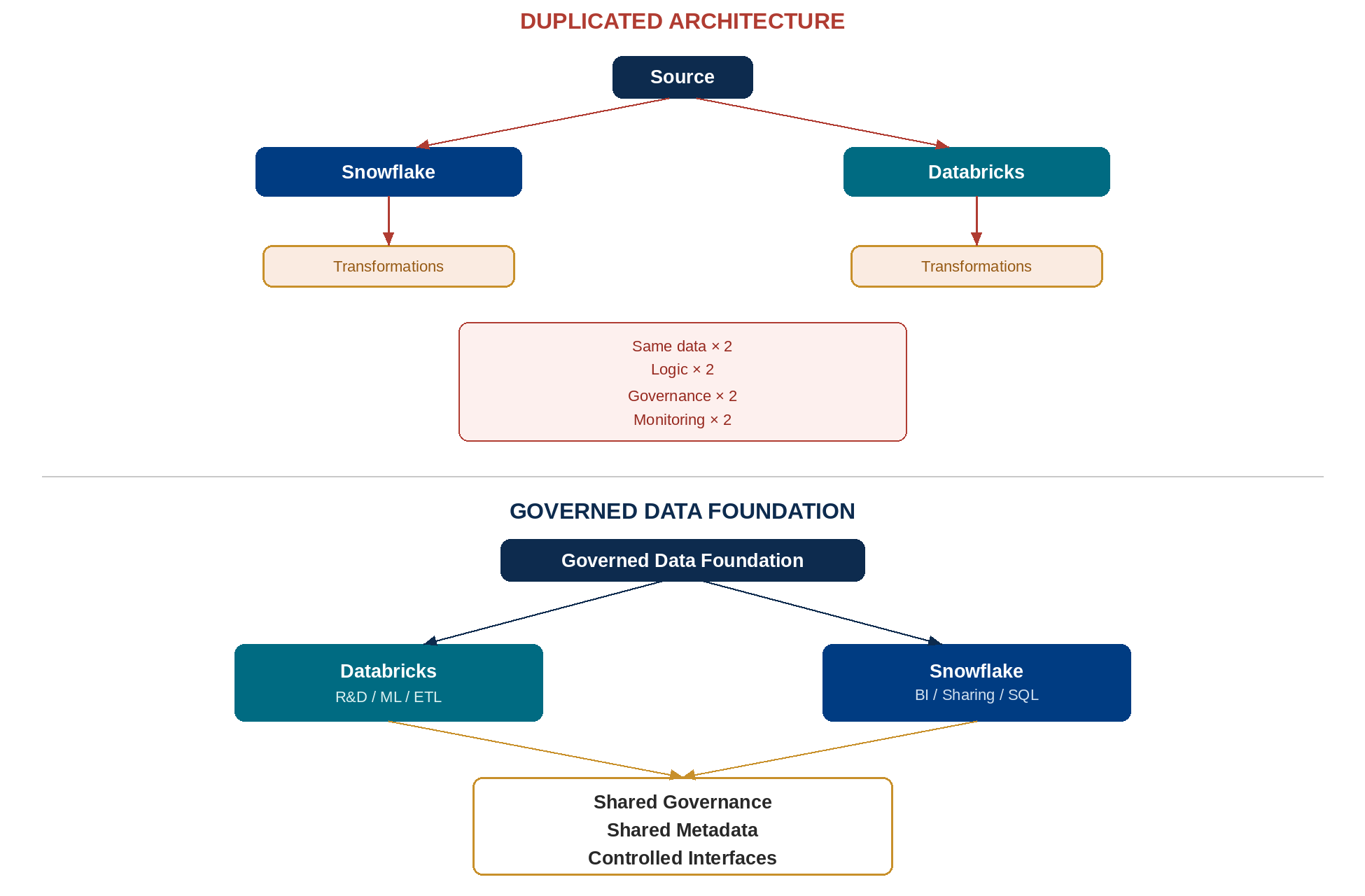
Figure 2: Why architecture complexity becomes a governance issue
In regulated environments, the best platform is therefore not necessarily the one with the most governance features. It may be the one that allows the organization to implement its governance model with fewer moving parts.
- Data Sharing Can Tip the Balance
Life sciences is increasingly collaborative. Pharmaceutical companies work with CROs, academic institutions, genomic organizations, technology providers, manufacturing partners and healthcare organizations, and internally, research, clinical, commercial and manufacturing teams also need to access information generated elsewhere. This makes data sharing an architectural capability rather than a convenience. Snowflake has historically placed significant emphasis on governed data sharing, and Pfizer’s experience is instructive because the company previously relied on copies and pipelines to move data between business units and regions before Snowflake’s sharing model became part of the mechanism for a more centralized and governed approach.
Databricks also supports data-sharing models, including Delta Sharing and interoperability through open formats, and IntuitionLabs notes that both platforms increasingly support collaboration and cross-platform data exchange. The real question is therefore how the organization collaborates. If the dominant requirement is enterprise-wide sharing of curated datasets, Snowflake can be highly attractive. If collaboration is deeply embedded in engineering and data-science workflows, Databricks can be a natural fit. The distinction becomes less about a single feature and more about how information moves through the organization.
- Open Data Formats Are Changing the Lock-In Question
The platform decision used to imply a stronger commitment to a particular storage architecture. That is changing. Apache Iceberg and other open table formats are increasingly important because they allow organizations to separate data storage from the engines used to process that data, a distinction that matters for life sciences because scientific datasets can remain valuable for decades. A genomic dataset created today may support research questions that have not even been defined yet, so an organization’s future analytical requirements may be very different from today’s requirements, and the ability to access data through different engines becomes strategically valuable.
Medidata provides a particularly useful case study here. In its modernization journey, the company moved from fragmented pipelines and multiple copies toward an architecture centered on Apache Iceberg, and AWS reports that Medidata’s new architecture provides a single source of data that can be accessed by different consumers without requiring additional downstream copies. Pipeline latency was reduced from hours or days to minutes, and AWS reports a 99% improvement in data-ingestion-to-analytics performance. Medidata’s underlying problem was architectural duplication: different consumers needed different data, so the organization had accumulated pipelines and copies, and an open table architecture allowed it to reduce that duplication while retaining flexibility.
This is precisely why Iceberg matters to the Snowflake-versus-Databricks discussion. The strategic question becomes: how much of the organization’s data architecture should depend on a single analytical engine? That is a very different question from which platform has the better dashboard experience.
- Cost Should Be Measured as Total Platform Economics
The cost comparison is another area where organizations can make poor decisions, because looking only at compute consumption rarely provides a complete picture. The real cost of a platform includes compute and storage, data engineering effort, platform administration, monitoring and observability, data movement, duplicate pipelines, duplicate storage, governance operations, validation, training, specialist talent and developer productivity. A platform that appears more expensive on a per-query basis may still be cheaper if it eliminates large amounts of engineering effort.
Pfizer’s reported results illustrate this point. The organization did not simply reduce infrastructure expenditure; Snowflake reports that it also saved employee processing time, reduced database costs and simplified data sharing, and the combined effect produced a reported 57% TCO reduction. The correct question is therefore not “what does the platform cost?” but “what does it cost to operate the workload on the platform?” That distinction becomes even more important when comparing Snowflake and Databricks, because the operating models can differ significantly: a highly managed environment may reduce infrastructure effort, while a more engineering-oriented environment may provide greater flexibility but require stronger internal platform capabilities. Neither model is inherently cheaper. The economics depend on the workload.
- The Organization’s Existing Architecture Matters More Than the New Platform
Another factor that is often underestimated is what already exists. A company rarely makes a platform decision from a blank sheet, it may already have Snowflake, Databricks, AWS, Azure, a legacy warehouse, Hadoop, SAS, Oracle, specialist research platforms or proprietary data stores. The cost of a new platform therefore includes the cost of changing the surrounding ecosystem. If an organization already has a mature Snowflake environment serving thousands of analysts, moving a workload to Databricks simply because it can run there may not create value. Likewise, if R&D teams have already built substantial Spark and ML infrastructure on Databricks, forcing those workloads into a separate warehouse can introduce unnecessary movement and duplication.
The existing architecture creates a form of gravitational pull. This does not mean organizations should never change platforms; it means the migration case should be based on measurable architectural friction. The relevant question is: what problem is the new platform solving that the current architecture cannot solve economically? If there is no compelling answer, the migration may simply replace one platform with another.
When Using Both Platforms Makes Sense
The idea that an enterprise must choose one platform is increasingly outdated. In life sciences, there are legitimate reasons to use both. A research organization might use Databricks for genomic processing, large-scale data engineering, machine-learning pipelines, imaging, scientific experimentation and multimodal AI, while using Snowflake for enterprise BI, commercial analytics, financial reporting, governed clinical analytics, cross-business data sharing and curated downstream datasets. This can be a sensible architecture if the boundary between the platforms is intentional.
The problem is not having two platforms. The problem is having two platforms doing the same work. A poorly designed dual-platform model duplicates the same data, the same logic, the same governance and the same monitoring across both environments, while a deliberate architecture gives each platform a clear role against a shared governance and metadata layer.
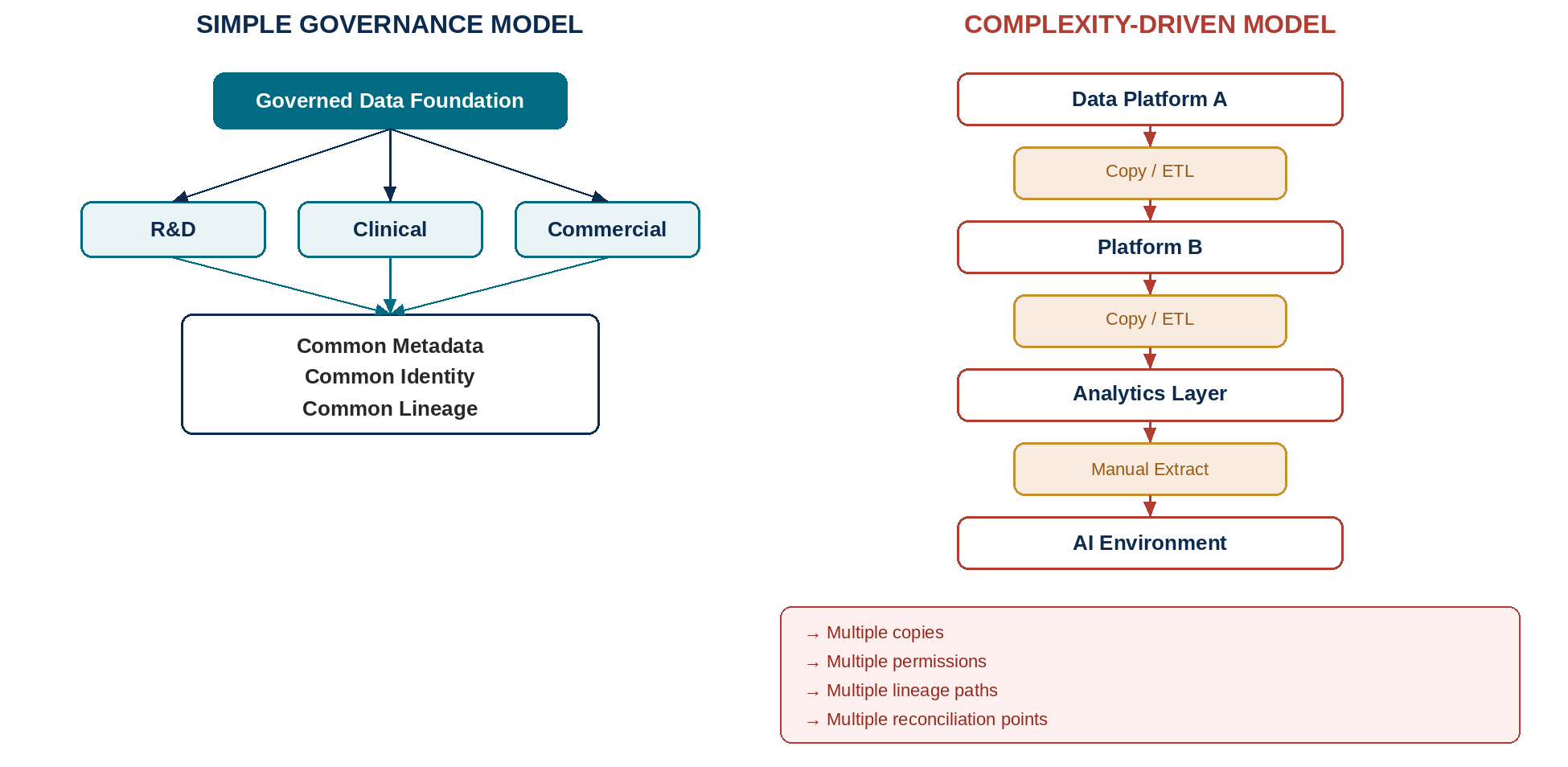
Figure 3: Deliberate coexistence versus duplicated platforms
The objective is therefore not to eliminate one platform at all costs. It is to make sure every platform has a clear architectural role.
From Platform Selection to Architecture Strategy
The strongest organizations do not begin platform selection with a vendor scorecard. They begin by mapping the data estate. They identify the critical workloads, the data types, the consumers, the governance requirements, the existing architecture and the expected future state, and only then do they evaluate the technologies.
This approach also creates a more defensible decision for regulated organizations. Instead of saying, “We selected Databricks because it is better for AI,” the organization can say, “We selected Databricks for workloads requiring distributed processing and machine learning because those workloads represent X% of our compute demand, require Y data types and are operated by teams with Z skills.” Similarly, an organization can say, “We selected Snowflake for enterprise analytics because our priority is governed SQL access across thousands of users, cross-business sharing and reduced platform administration.” That is a much stronger architecture decision.
PERCEPTIVE ANALYTICS PERSPECTIVE At Perceptive Analytics, we believe the Snowflake-versus-Databricks decision should begin with a workload-level assessment rather than a platform-level preference. The first question should not be “which technology is better?” It should be “which business and scientific decisions are currently being slowed down by the way data is stored, processed, governed or accessed?” That question changes the conversation immediately. For a life sciences organization, the assessment should map the major data domains across R&D, clinical development, real-world evidence, commercial operations, manufacturing and enterprise functions, evaluating each workload against data type, volume, processing pattern, latency, concurrency, machine-learning requirements, governance, sharing requirements, talent and total cost. This often reveals that the organization does not actually have one platform problem, it has several workload problems. |
A genomics pipeline may need highly scalable distributed processing. A clinical analytics application may need predictable SQL access and strict governance. A commercial analytics workload may prioritize concurrency and data sharing. An AI application may require access to both structured and unstructured information. Trying to force these workloads into one technology can create unnecessary complexity, which is why we see platform selection as part of a broader data architecture rationalization exercise. The objective is not to choose Snowflake because it is Snowflake, or Databricks because it is Databricks, but to define the role each technology should play in the architecture and make sure that role creates measurable value.
We also believe regulated organizations should treat complexity as a cost. Every additional copy of data creates another synchronization problem. Every additional pipeline creates another lineage path. Every additional governance system creates another control surface. Every additional specialized technology creates another talent dependency. This is why a platform decision should consider not only what a technology can do, but what the organization will have to operate around it. The best architecture is often not the one with the fewest technologies, it is the one with the fewest unnecessary responsibilities and duplicated capabilities.
A deliberate Snowflake-and-Databricks architecture can be simpler than a single-platform architecture that forces every workload into the wrong processing model. Conversely, using both platforms without clear workload boundaries can create an expensive architecture in which every dataset exists twice and every transformation is implemented twice. Our recommendation is therefore to make the platform decision evidence-based: map the workload, understand the data, identify the controls, assess the talent, model the economics, and only then choose the technology.
What To Do Instead: A Workload-First Platform Selection Framework
A practical platform decision should not begin with a vendor scorecard or a proof-of-concept built around whichever technology a team happens to already know. It should begin with the same workload-first discipline described throughout this briefing, applied as a repeatable seven-step process rather than a one-time procurement exercise.
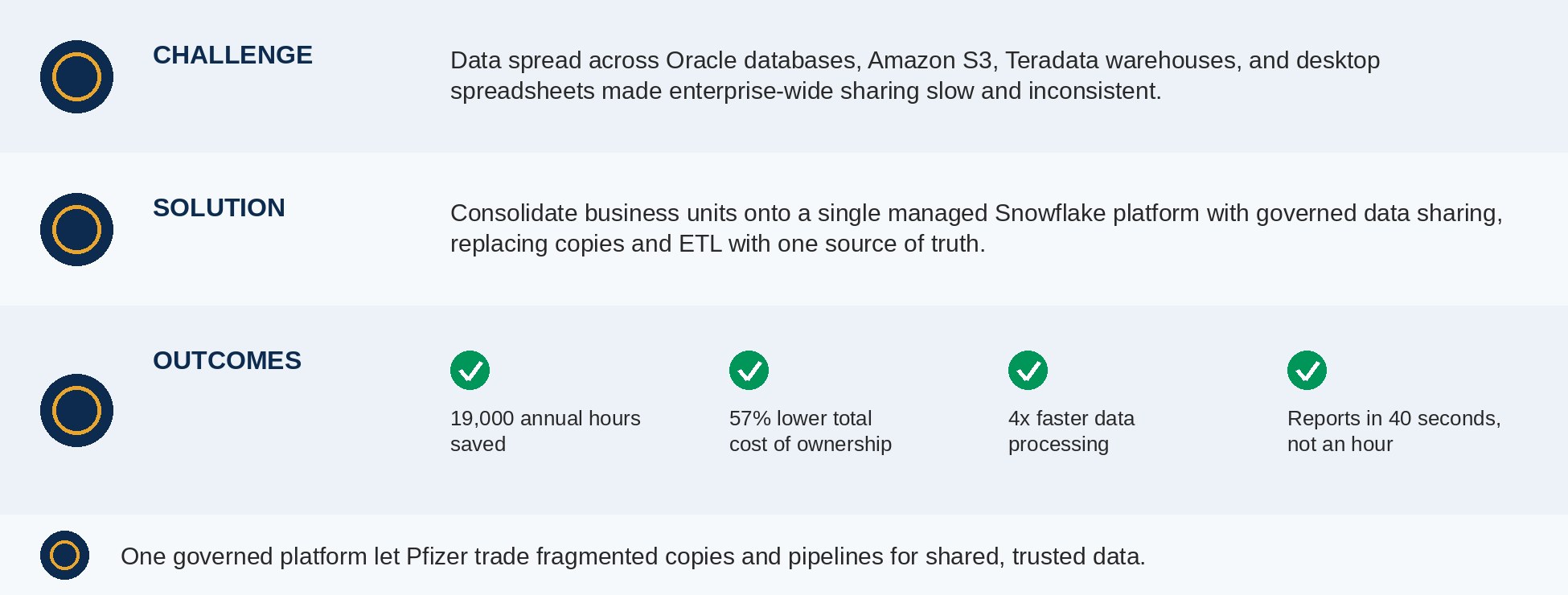
Figure 4: A workload-first platform selection framework
01 Map the Data Estate and Workload Portfolio
Begin by documenting where critical data lives, who owns it, how it is transformed and which business or scientific processes depend on it. Do not group everything under “analytics.” Separate R&D, genomics, clinical, RWE, commercial, manufacturing and enterprise workloads, because their requirements are fundamentally different, and a single combined inventory tends to hide exactly the distinctions this framework depends on.
02 Classify the Data
Determine which workloads depend primarily on structured, semi-structured or unstructured information, and identify the workloads that require large-scale distributed processing, multimodal analysis or machine learning. This step provides the first concrete indication of where Databricks or Snowflake may create a natural fit, rather than leaving that judgment to intuition or vendor preference.
03 Evaluate Governance and Validation Requirements
For every critical workload, document access controls, lineage, auditability, retention, validation and data-integrity requirements. Evaluate not only what the platform supports on paper, but how much operational complexity is required to implement and maintain those controls in practice, a distinction that matters far more in a regulated environment than a simple feature checklist ever will.
04 Assess the Talent Model
Map the skills required to operate each target architecture, considering SQL, Python, Spark, data engineering, machine learning, platform engineering and life sciences domain expertise. The objective is to choose an architecture the organization can operate sustainably rather than one that looks attractive only during procurement, when the demo team is far more capable than the team that will actually run the platform two years from now.
05 Model Total Cost of Ownership
Calculate platform consumption together with engineering effort, administration, data movement, duplicate storage, monitoring, governance, validation, training and specialist talent. The result should be a workload-level economic model rather than a simple vendor price comparison, because a platform that looks cheaper per query can easily turn out to be more expensive once the surrounding engineering and governance effort is counted.
06 Decide Whether One Platform or Both Are Justified
Only after the preceding assessment should the organization decide whether Snowflake, Databricks or both should form part of the target architecture. If both are selected, define explicit responsibilities for each, and design the architecture so that it is genuinely difficult for two teams to independently build the same pipeline, copy the same dataset and implement the same business logic.
07 Establish Measures of Success
Platform modernization should produce measurable outcomes. Organizations should track time to onboard new data, the number of duplicate pipelines and duplicate datasets, data-processing time, cost per workload, analyst productivity, data-sharing cycle time, governance exceptions, time to deploy new analytical use cases, and the percentage of workloads operating on the intended platform. The goal is not platform adoption. The goal is improved data economics and better scientific and business decision-making.
Proof Points: What the Industry Is Already Showing
The industry examples point toward a common conclusion: there is no universal platform winner. Pfizer provides a useful Snowflake example of the value of consolidating enterprise data, improving concurrency and simplifying sharing across business units and geographies.
AstraZeneca provides a useful counterpoint: its genomics and broader R&D environment combines population-scale genomic data, multi-omics, AI and laboratory automation, illustrating why scalable scientific data processing can be a central architectural concern.
Medidata provides another useful lesson. Its legacy environment had accumulated fragmented pipelines, copies and multiple access-control points, and the company moved toward an Iceberg-centered architecture that could serve multiple consumers from a common data layer. AWS reports that pipeline latency fell from hours or days to minutes and that the new architecture reduced the amount of operational maintenance required. These examples represent different architectural choices, but they point toward the same principle.
The winning architecture is the one that removes the organization’s most important source of friction.
Case Study: Pfizer and the Economics of a Snowflake-Centered Enterprise Data Platform
Pfizer provides one of the clearest public examples of why an organization may ultimately land on Snowflake. The challenge was not simply that Pfizer needed more compute. The company had a much broader enterprise problem: data existed across multiple systems and business units, and sharing information often required copies, ETL pipelines and additional processes, while different groups could also generate different versions of the same metrics.
At global pharmaceutical scale, this type of fragmentation becomes expensive in ways that compound rather than stay fixed. Every copy creates another dataset to govern. Every pipeline creates another dependency. Every business-unit-specific transformation creates another definition that can diverge. Every manual data request consumes employee time that could otherwise go toward analysis. Snowflake became part of Pfizer’s response by providing a centralized platform for enterprise data and governed sharing across what had previously been a landscape of Oracle databases, Amazon S3 storage, Teradata warehouses and individual desktop spreadsheets.
The reported results illustrate the compounding effect of solving the architecture rather than one individual query. Pfizer reports 19,000 annual hours saved, 57% lower TCO and 28% lower overall database costs compared with its previous solution. Snowflake also reports up to four-times faster analytics for certain workloads and a dramatic increase in the number of SQL queries Pfizer could run, field representatives who previously waited up to an hour for reports could access them in roughly 40 seconds, and an analytics cycle that once took 37 minutes on Snowpark now takes about eight.
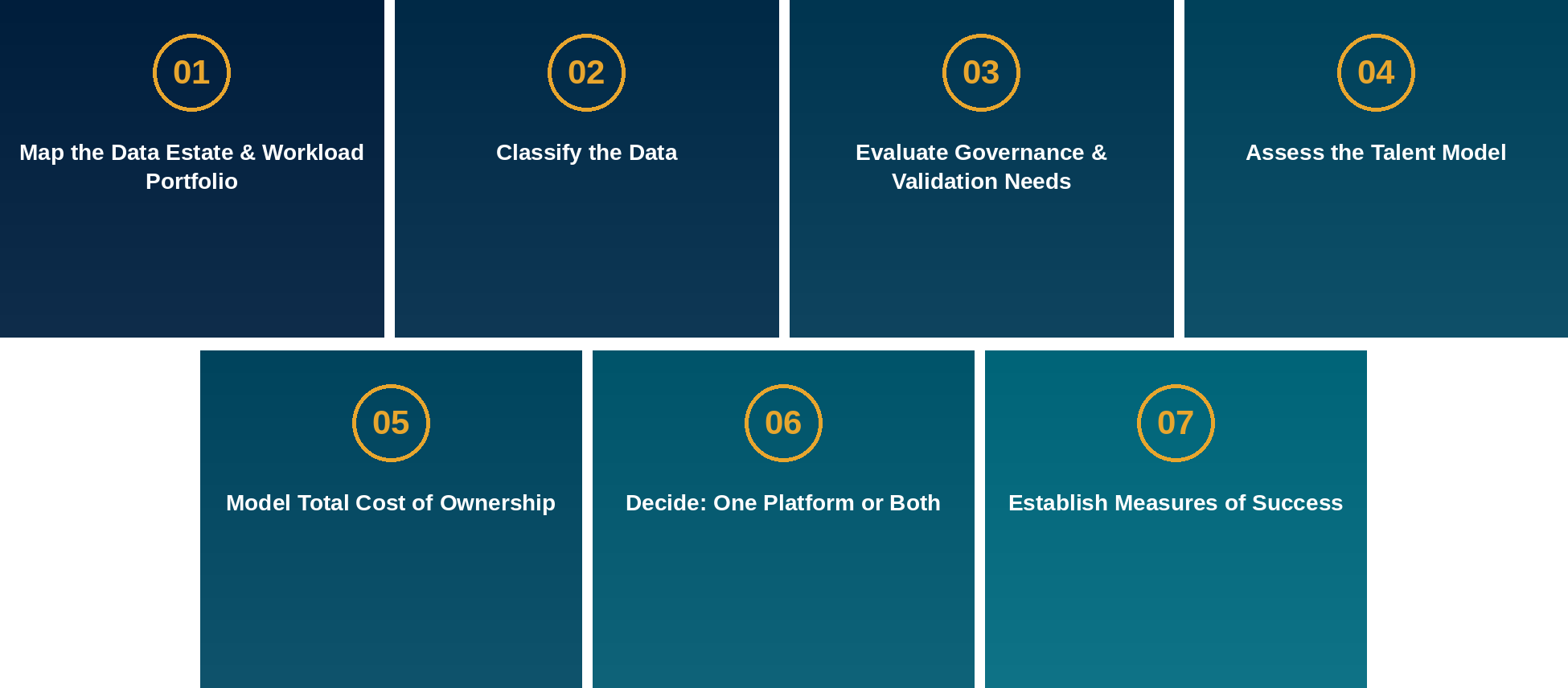
Figure 5: Pfizer’s Snowflake-centered enterprise data platform
What makes the case important is not the headline percentage. It is the reason the platform created value. Pfizer’s problem was fragmented enterprise data and the operational burden surrounding it, and the platform addressed that problem by making data more centrally accessible, improving concurrency and reducing the number of mechanisms required to share information. This is exactly why the Snowflake decision should not be interpreted as evidence that Snowflake is universally superior to Databricks. If Pfizer’s primary problem had instead been a massive genomics-processing workload or a machine-learning pipeline requiring extensive distributed computation, the evaluation would have looked different. The platform followed the problem.
Conclusion
Snowflake and Databricks have both evolved far beyond the categories in which they were originally defined. Snowflake is no longer simply a cloud data warehouse, and Databricks is no longer simply a Spark-based data lakehouse. Both now provide capabilities across data engineering, analytics, governance, AI and machine learning. That convergence does not eliminate the platform decision. It makes the decision more important, because as the products overlap, organizations need to become more precise about the workloads they are trying to support.
Snowflake can be a natural fit for organizations whose center of gravity is governed enterprise analytics, SQL, concurrency and cross-business data sharing. Databricks can be a natural fit for organizations whose center of gravity is large-scale data engineering, multimodal scientific data, machine learning and AI. Some organizations will need both. The critical distinction is between deliberate coexistence and accidental duplication. A deliberate architecture assigns each platform a clear role and minimizes unnecessary movement and duplication. An accidental architecture allows different teams to build overlapping pipelines, duplicate datasets and independent governance processes simply because both platforms are available.
The right response is therefore not to ask which vendor wins the market. It is to ask which platform wins for a particular workload. For regulated life sciences organizations, the final decision should consider workload fit, data characteristics, governance, validation, talent, interoperability, collaboration and total platform economics. The question should ultimately become: which platform should do what, for which workload, under which controls, and at what total cost? That is a much more durable decision framework than choosing a technology based on feature comparisons alone.
Perceptive Analytics works with life sciences organizations to modernize data and analytics environments through scalable data engineering, cloud data platforms, advanced analytics and AI. Our approach is workload-led and technology-agnostic: the objective is to create governed, reusable data foundations while selecting the technologies that best fit the scientific and business problems the organization needs to solve.
“The right data platform is not the one that wins the feature comparison. It is the one that fits the workload, operating model and regulatory reality of the organization.”
References & Sources
- IntuitionLabs, “Databricks vs. Snowflake for Life Sciences: A Comparison.” Originally published October 17, 2025; updated August 9, 2026. Covers architecture, genomics, clinical analytics, AI/ML, governance, sharing, and industry examples including Pfizer and Regeneron. https://intuitionlabs.ai/articles/databricks-vs-snowflake-life-sciences
- IntuitionLabs, “Pharma R&D Data Lakehouses: Databricks, Snowflake & Iceberg.” Covers pharmaceutical R&D data architectures, Apache Iceberg, and real-world examples including AstraZeneca, Pfizer and Illumina, including the SRA growth comparison cited in this article. https://intuitionlabs.ai/articles/pharma-data-lakehouse-databricks-snowflake-iceberg
- Snowflake, “Pfizer Accelerates Insights and Lowers TCO by 57% While Processing Data 4x Faster With Snowpark.” Primary customer case study for the Pfizer figures cited throughout this article. https://www.snowflake.com/en/customers/all-customers/case-study/pfizer/
- AstraZeneca, Centre for Genomics Research / Genomics. Primary source for AstraZeneca’s population-genomics scale, including more than 1.7 million genomes with matched clinical insights. https://www.astrazeneca.com/r-d/our-technologies/genomics.html
- AstraZeneca, Science and Technologies in R&D. Covers AstraZeneca’s R&D use of AI, genomics, multi-omics, laboratory automation and related technologies. https://www.astrazeneca.com/r-d/our-technologies.html
- Databricks, “Building the Commercial Lakehouse: AI-Driven, Open and Interoperable.” Data + AI Summit session describing a commercial lakehouse architecture with Unity Catalog governance and Iceberg interoperability with Snowflake. https://www.databricks.com/dataaisummit/session/building-commercial-lakehouse-ai-driven-open-and-interoperable
- AWS, “Medidata’s Journey to a Modern Lakehouse Architecture on AWS.” Case study describing Medidata’s move from fragmented pipelines toward an Apache Iceberg-based architecture serving thousands of clinical trials. https://aws.amazon.com/blogs/big-data/medidatas-journey-to-a-modern-lakehouse-architecture-on-aws/
- EPAM, “R&D Revolution in Life Sciences: Designing Data Platforms to Enable AI.” Industry perspective on life-sciences data silos, FAIR data, interoperability, metadata and AI-ready R&D platforms. https://www.epam.com/insights/blogs/r-and-d-revolution-in-life-sciences-designing-data-platforms-to-enable-ai
- Snowflake, Life Sciences. Snowflake’s official overview of its life-sciences capabilities and customer examples. https://www.snowflake.com/en/solutions/industries/healthcare-and-life-sciences/life-sciences/
- IntuitionLabs, “Pharma R&D Data Lakehouses” (PDF report). Extended discussion of Databricks, Snowflake and Iceberg in pharmaceutical R&D. https://intuitionlabs.ai/pdfs/pharma-r-d-data-lakehouses-databricks-snowflake-iceberg.pdf