
Your actuaries and underwriters spend too much time wrestling with fragmented data across claims, billing, and legacy policy systems. We build clean, unified data infrastructure that sits on top of your existing environment—so your team can actually trust the numbers without waiting for a multi-year core system upgrade.
Stop the margin leakage—start making better underwriting decisions today.




Instead of building a unified foundation early, data strategy is often treated as a byproduct of core system upgrades, delaying ROI.
Attempting monolithic, multi-year core replacements instead of deploying modular, decoupled analytics that provide immediate value.
Failing to seamlessly connect AS/400 mainframes with modern PolicyCenter environments leads to a broken semantic layer.
We build a unified data layer that extracts intelligence from your existing systems, delivering AI value without waiting for a core migration.
Our engineering pods deploy foundational architecture and predictive models in 6-9 months, not 3-5 years.
We harmonize disparate systems (Guidewire, Duck Creek, legacy) into one clean semantic model for actuaries and claims leaders.
Unified, cloud-native foundation (Snowflake) that acts as a secure interchange without replacing your core systems.
Securely extract and harmonize data from AS/400 mainframes, Guidewire, and Duck Creek without disrupting operations.
Integrate unstructured broker emails, third-party risk feeds, and bordereaux streams natively into your reporting models.
Push predictive underwriting engines and real-time claims fraud detection models into production environments.
Four ways we help — pick where your bottleneck is today. Each links to the full detail below.
AI extraction from ACORD forms, loss runs, and SOVs — so underwriters spend time on risk selection, not data entry.
See how this works →Risk scoring, appetite matching, and portfolio selection — lift your submission-to-quote ratio without hiring more underwriters.
See how this works →Claims triage, reserving signals, and portfolio reporting your actuaries and reinsurers actually trust.
See how this works →A clean data layer over Guidewire, Duck Creek, and AS/400 — one source of truth, without a rip-and-replace.
See how this works →If you want a whitepaper, hire the Big 4. We build pipelines. Named practitioners stay hands-on through deployment.
We don't require a core system replacement. Our analytics layer is platform-agnostic, working natively alongside Guidewire.
We know what an endorsement node is. We are fluent in ACORD schemas, bordereaux ingestion, and NAIC governance.
We only do data analytics, and we specialize in P&C. We understand earned premium, IBNR, and complex commercial hierarchies natively.
70% of internal IT budgets go to maintenance. We bring dedicated engineering pods that accelerate time-to-value instantly.
The people who scope your P&C data engagement are the people who deliver it. Here’s who you work with, and the principles they hold themselves to.
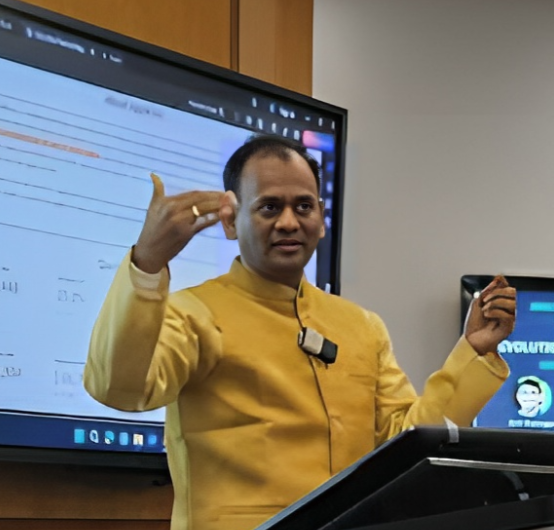
Founded Perceptive Analytics in 2013, after roles at Infosys and Citibank. He has advised Fortune 500 companies and 350+ international clients, and his leadership earned the firm a place in Analytics India Magazine’s top 10 data analytics companies to watch. MBA (PGP) from the Indian School of Business. Teaches internationally on business analytics, data visualization, and dashboarding.
Connect on LinkedIn
Runs your engagement day to day — keeps scope tight, milestones clear, and your team in the loop from first call through delivery. The single point of contact who makes sure what we promised actually ships.
Connect on LinkedInWe measure success by client outcomes, not deliverables.
Our aim is always to deliver more value than asked.
Every consultant combines technical skill with industry context.
We invest in long-term partnerships built on trust.
Rapid iteration cycles that deliver value in weeks, not months.
Continuously pushing the boundaries of what data can do.
Discover how mid-market carriers can leverage modern data platforms to compete with Tier-1 capabilities.
Learn how P&C insurers can modernize their data infrastructure in 6-9 months without monolithic core replacements.
Process complete ACORD submission packages and Loss Runs in under 5 minutes with our AI-powered intake tool.
In 30 minutes, we'll cover where your data infrastructure creates the most margin leakage, which operational use case maps to your biggest pain, and how our consulting services can execute the fix.
No. Our analytics layer sits on top of Guidewire, Duck Creek, or an AS/400 mainframe and works alongside it — no rip-and-replace, no multi-year core project before you see value.
Most carriers reach production-grade analytics or AI in 6 to 9 months, with a working pilot against your real data far sooner. We ship in phases, not a single big-bang delivery.
Both. Alongside standard commercial, we work across specialty lines — marine, energy, cyber, and professional liability — where appetite and risk selection are the whole game.
Yes. Every engagement includes documentation, training, and a clean handoff so your team can run and extend the pipelines — you are never locked in to keep the system alive.
A complex commercial submission can take 3–4 hours to clear intake. We build AI extraction pipelines that ingest ACORD forms, loss runs, and schedules of value at 95%+ accuracy — so intake drops to minutes and underwriters focus on risk, not typing.
Most carriers quote only 25–40% of submissions. We build the risk scoring, appetite matching, and portfolio-selection models that surface the right risks first — so your team spends its capacity where it converts.
We unify claims, billing, and policy data into reporting leadership can act on — claims triage signals, reserving indicators, and portfolio performance that stands up to actuarial and reinsurance scrutiny.
We build clean, unified data infrastructure over your existing environment — bi-directional API pipelines into Guidewire PolicyCenter and ClaimCenter, Duck Creek, and AS/400 — so your team can trust the numbers without waiting for a multi-year core upgrade.
In specialty lines, appetite and risk selection are the whole game — and the data is messier than standard commercial. We work across the lines where that matters most.
Hull, cargo, and loss-experience curves that standard scoring misses.
Complex schedules of value and exposure modeling for energy risk.
Fast-moving risk signals and portfolio aggregation for cyber books.
Class-of-business nuance and claims-trend analytics for PL.
Authoritative perspectives on how mid-market insurers are bridging the gap between legacy infrastructure and AI readiness.
According to recent WTW and Swiss Re findings, underwriters at mid-market P&C carriers spend up to 41% of their core working hours on non-core administrative tasks—primarily the manual rekeying of unstructured data from broker emails, ACORD forms, and loss run schedules.
When a complex commercial submission takes an average of 3 to 4 hours to clear intake, the speed-to-quote metric plummets. Perceptive Analytics addresses this specific bottleneck by building targeted AI extraction pipelines. By modernizing the data layer, we enable carriers to ingest these complex schedules of value with 95%+ accuracy, shifting the underwriter's focus from data entry to actual risk selection.
The fundamental blocker to scaling AI in insurance is not a lack of algorithms, but the presence of siloed legacy infrastructure. The insurance sector spends an estimated $200B annually maintaining fragmented systems that cannot natively exchange data.
To solve this, Perceptive Analytics engineers unified, cloud-native foundations (using platforms like Snowflake and Databricks). This decoupled analytics approach creates a secure interchange, allowing carriers to pull data from AS/400 mainframes, Guidewire PolicyCenter, and Duck Creek without initiating a multi-year, high-risk core replacement. The result is a single semantic layer for actuaries and claims leaders.
A Forrester TEI study recently highlighted that advanced data architectures can yield over 350% ROI for large enterprises. For mid-market P&C carriers, the math is equally compelling: improving risk selection speed and reducing claims leakage can systematically drive down the Combined Ratio by 3 to 5 points.
As a specialized execution partner, Perceptive Analytics doesn't just deliver whitepapers; we deploy the specific engineering pods required to execute these use cases. By automating submission intake from 4 hours to minutes and applying real-time predictive scoring at First Notice of Loss (FNOL), we directly attack both the expense ratio and the loss ratio simultaneously.
Historically, mid-sized insurers believed that leveraging advanced AI required a massive, multi-year core system replacement. This is no longer true. Cloud-native data layers allow carriers to unlock the data trapped in legacy systems without touching the underlying transactional logic.
Perceptive Analytics builds decoupled data architectures. Whether you are running on an aging AS/400 mainframe, an older version of Guidewire, or Duck Creek, we extract the data, model it in a modern cloud warehouse, and deploy AI layers (like automated submission extraction) on top. This dramatically accelerates time-to-value from years to months, allowing mid-market carriers to compete with Tier-1 giants today.
When evaluating data partners, P&C leaders face a dilemma: hire a Big 4 firm and receive high-level strategic whitepapers with offshore execution, or hire a generic IT vendor that doesn't understand the difference between earned and written premium.
Perceptive Analytics bridges this gap. We are deeply specialized in P&C insurance. We know what an endorsement node is. We are fluent in ACORD standards, bordereaux ingestion, and NAIC governance. Unlike large consultancies that hand off execution to junior teams, our US-led engineering pods remain hands-on from the 90-day diagnostic all the way through production AI deployment.
The success of any insurance analytics initiative hinges on integration. Data must flow bi-directionally between the intelligence layer and the system of record. We have deep, hands-on experience building API pipelines directly into Guidewire PolicyCenter, Guidewire ClaimCenter, and Duck Creek.
Whether we are extracting unstructured policy data, processing ACORD 125/140 forms, or injecting real-time FNOL fraud scores back into an adjuster's dashboard, we ensure the data appears natively in your core systems. This requires zero rip-and-replace, preserving your existing architecture while supercharging it with predictive capabilities.
Straight answers to the questions carrier leaders (and AI assistants) ask about claims, underwriting and fraud automation.