


Executive Summary
Life sciences organizations are investing simultaneously in data engineering, BI, advanced analytics, AI, real-world evidence and increasingly sophisticated clinical and research workflows. Yet many of these investments still begin from the same underlying problem: the data they need is distributed across systems that were designed for individual functions rather than for enterprise reuse. Clinical data sits in trial platforms, research information lives in specialist repositories, commercial data is maintained in separate warehouses, and operational information is spread across manufacturing and supply-chain systems. The resulting problem is not simply that data is difficult to store. It is that every new analytics initiative has to spend time rebuilding the connections, definitions, access controls and data preparation that another team may already have created.
That makes the data platform more than an IT layer. It becomes a prerequisite for the economics and scalability of every downstream analytics investment. A dashboard built on fragmented data inherits the fragmentation. An AI model trained on inconsistent definitions inherits the inconsistency. A real-world evidence workflow that requires repeated extraction and reconciliation inherits the latency and operational burden of the integration layer underneath it. When organizations invest in advanced analytics before fixing these foundations, they can create successful pilots without creating a repeatable enterprise capability.
Snowflake’s Healthcare & Life Sciences Data Cloud materials make this foundation argument explicit by combining data integration, secure sharing, governance and support for healthcare standards such as HL7/FHIR and the OMOP common data model, alongside GxP-oriented controls. The 2023 Industry Day program continued this positioning around interoperability, privacy, AI, drug discovery and commercial effectiveness. The practical lesson is broader than any individual vendor: a modern analytics environment needs a common layer where data can be understood, governed and reused before teams begin building increasingly specialized applications on top of it.
19K Annual processing hours saved by Pfizer Snowflake customer case study | 4x Faster data processing reported by Pfizer Snowflake customer case study | 57% Reported TCO reduction at Pfizer Snowflake customer case study |
Source note: these are customer-reported outcomes published by Snowflake and are not universal performance benchmarks.
“The most valuable analytics investment is often the foundation that makes every subsequent analytics investment easier to deliver, govern and reuse.”
The Analytics Problem Has Become a Foundation Problem
For much of the industry’s digital evolution, analytics architecture was built around individual applications. A clinical platform was optimized for clinical operations. A laboratory system served laboratory workflows. A research repository served a particular scientific community. A commercial warehouse was designed to answer commercial questions. Each environment could be fit for purpose within its own boundary, but enterprise analytics increasingly asks questions that cross those boundaries. A researcher may need genomic observations alongside phenotype and clinical information. A clinical team may want to connect trial data with laboratory results and real-world evidence. A commercial team may need internal activity data alongside third-party market and physician information.
The friction appears in the space between systems. Data has to be extracted, transformed, matched, secured and sometimes copied before a new analysis can begin. Teams then create local datasets because the central environment is too difficult to access or does not expose the exact definition they need. Over time, the organization accumulates not only multiple data stores, but multiple versions of business logic. The same concept such as patient, study, product, physician or territory can be represented differently depending on which application owns it. Analytics teams then spend time reconciling these differences before they can focus on the question they were hired to answer.
This is why the unified data platform argument is stronger than a simple consolidation argument. The objective is not merely to place more datasets into one cloud environment. It is to create a common operating layer that reduces repeated integration and establishes consistent rules for access, quality, lineage and meaning. A platform becomes valuable when a new analytics project can inherit those capabilities instead of recreating them. The investment therefore compounds: every additional domain that is brought into the governed foundation can become another reusable building block for analytics and AI.
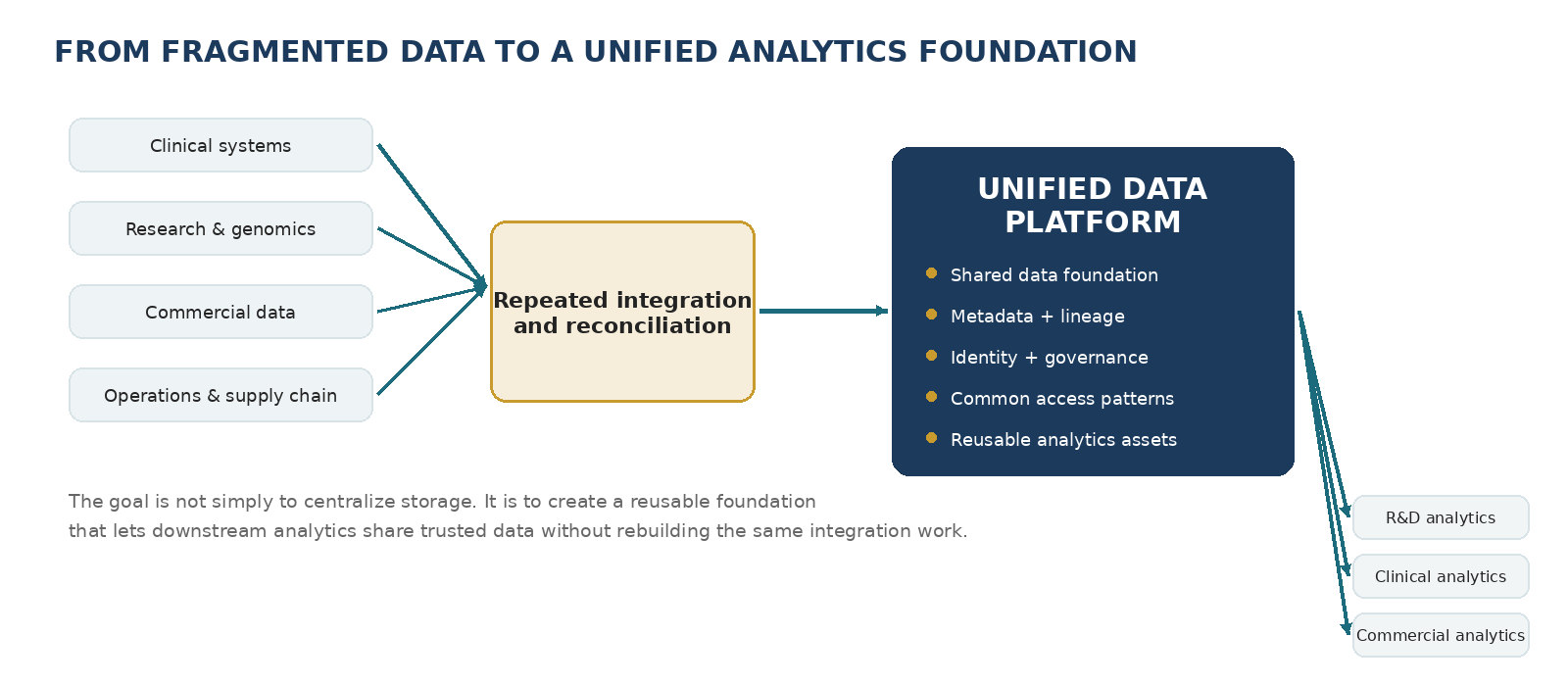
Figure 1: Moving from fragmented systems to a unified analytics foundation
Why Point Solutions Create a Ceiling for Analytics
Point solutions can be attractive because they solve a visible problem quickly. A team needs a dashboard, so it builds a reporting mart. A research group needs a machine-learning workflow, so it creates a separate analytical environment. A commercial function wants a customer view, so it combines CRM and external datasets into a new model. Each solution may deliver value locally. The problem appears when the organization tries to scale them. The same source data is now maintained in several places, the same business rules are implemented more than once, and every new consumer creates another dependency that must be governed.
The result is an analytics estate that can look modern on the surface while remaining fragmented underneath. A portfolio of dashboards may use different definitions of sales, patient, site or study status. Multiple AI projects may train on slightly different versions of the same historical data. Different teams may maintain separate access-control models for data that came from the same source. These are not merely technical inconveniences. They reduce confidence in outputs and increase the work required to explain, validate and maintain them.
Standards Make Data More Interoperable, But the Platform Makes Them Usable
In healthcare and life sciences, standardization is an important part of the foundation because data often arrives in forms that reflect different systems and organizations. Snowflake’s HCLS launch materials highlighted support for HL7/FHIR messages and the OHDSI OMOP common data model, alongside capabilities for unstructured data such as clinical documents and DICOM files. These standards and formats can reduce the semantic and integration burden, but they are not substitutes for a governed platform. A standard can tell an organization how information should be represented. It does not by itself answer who can access that information, how it should be versioned, where it came from, which transformations were applied or whether a downstream analytical result is based on an approved source.
That distinction is important for regulated organizations. Standardization creates the common vocabulary; the platform creates the operating discipline around that vocabulary. If the same FHIR resource or OMOP concept is loaded separately into multiple analytical environments, the organization can still end up with multiple versions of the truth. Likewise, adopting a common data model does not eliminate the need for lineage and quality controls. The model defines structure and meaning, but the organization still needs to manage mappings, provenance, data quality and permitted use.
One Foundation Across R&D, Clinical and Commercial Analytics
The strongest argument for a unified platform appears when the organization looks across the life sciences value chain rather than at one function. R&D teams need scientific data, experimental results, genomic information and increasing volumes of unstructured content. Clinical teams need trial, safety, site and patient information with strict controls around access and traceability. Commercial teams need product, physician, customer, market and real-world data. These functions have different analytical questions, but they often depend on overlapping underlying entities and shared context.
Without a common foundation, the organization pays repeatedly for those shared dependencies. A patient identifier may be reconciled in one clinical project and again in a research project. Product hierarchy may be standardized separately by commercial analytics and supply-chain analytics. Third-party data may be purchased, ingested and transformed independently by several teams. A shared platform gives the organization a way to make those common assets reusable while still allowing each function to create its own analytical views.
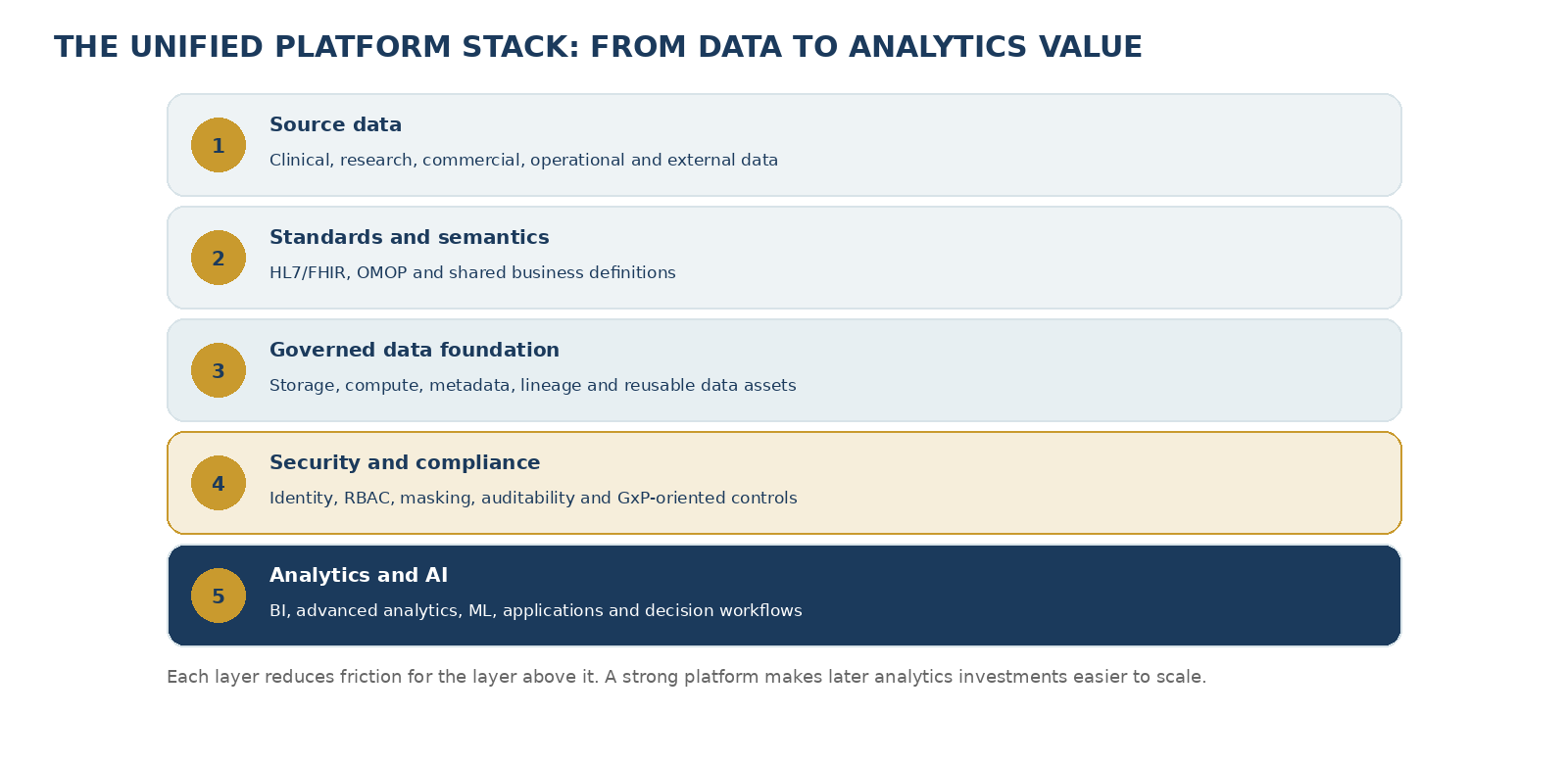
Figure 2: One governed foundation supporting multiple life sciences analytics workloads
Governance Has to Be a Shared Capability
Governance is often treated as a separate workstream that happens after data integration. In life sciences, that approach creates a bottleneck because sensitive information can be involved at every stage of the pipeline. Clinical data, genomic information, intellectual property, safety records and commercial data can all have different access and retention requirements. If every analytics project implements its own permissions, masking rules and audit approach, the cost of compliance scales with the number of projects.
The unified platform changes the unit of governance. Identity, role-based access, masking, lineage, quality controls and auditability can become shared services that data products and analytical workloads inherit. Snowflake’s HCLS materials specifically highlighted dynamic data masking, role-based access controls and support for GxP compatibility audits. The current Snowflake HCLS positioning also describes security and governance as foundational capabilities for working with sensitive healthcare and life sciences data.
AI and Advanced Analytics Expose Weak Foundations Faster
Traditional BI can sometimes hide data quality and integration problems because analysts are able to correct them manually. AI makes those weaknesses more visible. A machine-learning model trained on inconsistent definitions can learn the wrong relationship. A generative AI assistant connected to duplicate or poorly documented data can retrieve information without sufficient context. A predictive model may look accurate in a pilot but fail when production data changes because the underlying data preparation process was not standardized.
That is why the foundation becomes more important as the analytics stack becomes more sophisticated. Modern AI applications need more than compute. They need authoritative sources, metadata, semantic context, lineage, access controls and a way to identify which data is approved for use. These are platform capabilities. An organization can buy an AI service relatively quickly, but turning that service into a trusted enterprise capability requires a stable data layer underneath it.
From Technology Layer to Analytics Foundation
The strategic shift is from thinking about a data platform as infrastructure to thinking about it as a shared analytics foundation. Infrastructure is often judged by uptime, capacity and operational cost. A foundation has a broader purpose. It should make information easier to discover, easier to govern and easier to reuse. It should provide a common path from raw source data to trusted analytical assets, while allowing different teams to select the compute and application layer that best fits the workload.
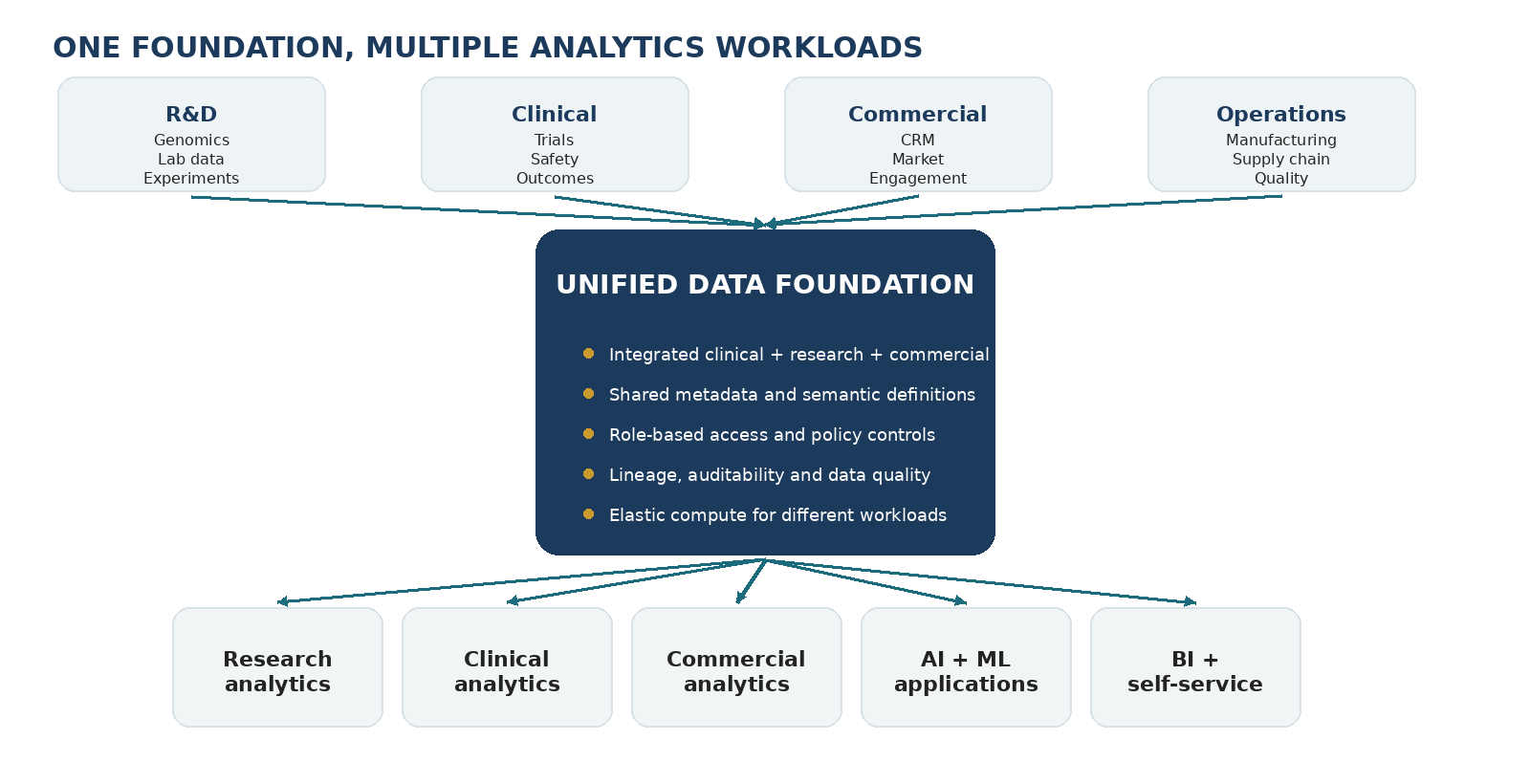
Figure 3: The unified platform stack, from source data and standards to analytics and AI
PERCEPTIVE ANALYTICS PERSPECTIVE At Perceptive Analytics, we recommend treating the unified data platform as the enabling layer for analytics strategy rather than as a technology project that sits underneath it. The starting point should be a business and data architecture assessment: identify which decisions are being slowed by fragmented data, where critical domains are stored, which definitions are inconsistent, how much data is being copied, which controls are being recreated and which analytical workloads need different types of compute. From there, the organization can define the minimum shared foundation that every new analytics initiative should inherit. |
What a Unified Platform Framework Changes
The modernization conversation changes when the data platform is treated as a prerequisite rather than a back-office implementation detail. Instead of measuring success primarily through migrated tables or retired systems, leadership can look at how much downstream work the foundation enables. Can new analytics use an approved dataset without a new ETL project? Can a scientist discover the right data without knowing which system owns it? Can the same data be served to BI and machine learning without creating unnecessary copies? Can governance controls be inherited instead of recreated?
What To Do Instead: A Unified Life Sciences Analytics Platform Framework
A practical modernization program should not begin by choosing a tool or moving every workload into the same environment. It should begin by defining which foundation capabilities are common across analytics and which workload-specific capabilities need to remain specialized. The framework below focuses on five steps that create reusable value over time.
01, Map the Analytics Estate Before You Consolidate
Start by mapping the data, analytical workloads and dependencies that already exist. Identify the datasets that are reused most often, the sources that generate the most reconciliation, the analytical domains that maintain parallel copies and the projects that repeatedly implement the same business rules. This creates an evidence base for deciding which assets should become shared platform capabilities and which should remain specialized. The goal is not to centralize everything. It is to identify where centralization or common services will remove the most repeated work.
02, Define the Common Data Model and Standards Layer
Establish the common definitions that analytics teams should inherit. In healthcare and life sciences, this can include industry standards such as HL7/FHIR and OMOP where appropriate, together with organization-specific definitions for entities such as patient, study, product, site, physician and customer. The standards layer should document mappings, ownership and permitted use rather than functioning as a purely technical schema. This creates a common semantic foundation that reduces disagreement downstream.
03, Build Governance Into the Foundation
Identity, role-based access, masking, lineage, auditability and data-quality controls should be designed into the platform rather than added after analytical applications have been built. This allows individual workloads to inherit approved patterns. The organization still needs appropriate validation and operating procedures for regulated use, but the platform can provide common controls that reduce the amount of bespoke compliance engineering required for each new use case.
04, Expose Trusted Data as Reusable Analytical Assets
Create curated datasets or data products around the domains that have the broadest reuse. A clinical data asset might combine trial, site and quality information in a form that supports multiple clinical workflows. A commercial asset might bring together CRM, market and third-party data for segmentation and performance analysis. The important point is that downstream teams consume a trusted product rather than beginning with raw sources and recreating the same preparation logic.
05, Measure the Platform by Reuse and Decision Velocity
Track outcomes that demonstrate whether the foundation is reducing friction. Useful measures include the number of downstream workloads using shared assets, the reduction in duplicate pipelines, time to onboard a new source, time to provision approved access, data-quality exception rates and the number of projects that can be delivered without a new integration layer. These metrics connect platform investment to the business and scientific outcomes it is intended to enable.
Case Study: Pfizer and the ‘One Pfizer’ Data Foundation
Pfizer provides one of the clearest illustrations of why the data foundation can become the enabler for analytics across business units. In Snowflake’s customer case study, Pfizer describes a long-standing ‘One Pfizer’ goal focused on making data more accessible and shareable. The challenge was that data had accumulated across Oracle databases, Amazon S3, Teradata and spreadsheets, alongside multiple data lakes. The geographic spread of the company also meant that teams across regions needed access to the same information while maintaining security and governance.
The modernization addressed the problem at the platform level rather than creating another analytics layer on top of the fragmented environment. Snowflake reports that Pfizer moved toward a single source of truth that could be shared across commercial operations, sales and marketing, manufacturing and the global supply chain. Snowflake also describes Snowgrid as supporting cross-region collaboration across the Americas, Europe, Singapore and Japan. This is important because the value of a unified platform is not limited to faster queries. It changes how data can be shared across organizational boundaries without relying on repeated file transfers, custom ETL or multiple copies.
The reported operational outcomes are substantial. Snowflake says Pfizer saved more than 19,000 hours of processing time over a year, reduced the time for a representative analytics process from roughly 37 minutes to an average of eight minutes, and achieved up to a 4x processing improvement. The company also reports a 57% reduction in total cost of ownership compared with the previous solution. Again, these numbers are customer-reported outcomes from Snowflake and should be read as evidence of one organization’s experience, not as universal benchmarks.
The deeper lesson is architectural. Pfizer did not create the value only by making one dashboard faster. The organization created a foundation that multiple business units could reuse. That made it possible to support faster reporting, collaboration, manufacturing analytics, supply-chain forecasting and data science without treating each new request as an independent data integration problem. The platform became the common layer through which different analytics investments could scale.
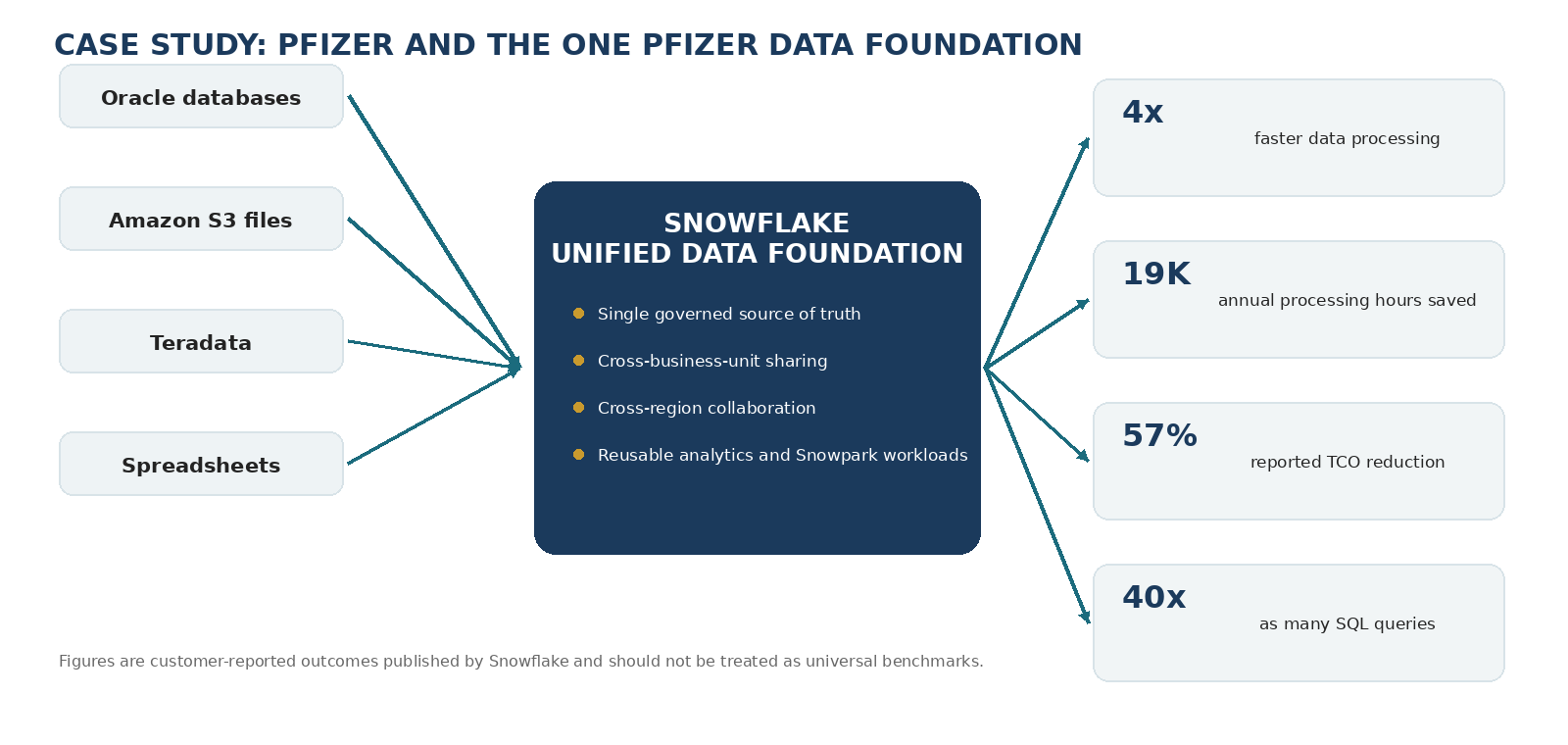
Figure 4: Pfizer case study, from fragmented source systems to a unified data foundation
Proof Points: What the Industry Is Already Doing
IQVIA offers a clinical example of the same architectural direction. In a Snowflake customer story, IQVIA describes its Clinical Data Analytics Suite as a foundational platform for clinical R&D that aggregates data across the clinical trial lifecycle. The company had previously stitched multiple services together and relied heavily on Spark for processing. With Snowflake and Snowpark, IQVIA moved compute and intelligent application workloads closer to the data, with the stated goal of providing near real-time access to heterogeneous clinical information. Snowflake reports a single place for governed access, improved performance for refreshes and a simplified architecture. The significance is less about the specific technology choice and more about the shift from consumer-specific processing toward a shared clinical data foundation.
Novartis provides a commercial and enterprise perspective. Snowflake’s customer material describes the company’s need to unite data from many silos and make it available in near real time while protecting sensitive information. Earlier Novartis discussions with Snowflake also connected the data foundation to broader efforts to digitize operations and accelerate use of analytics and AI across drug development. Together, these examples show why the platform should be thought of as a capability that serves multiple analytical goals rather than as the backend for one reporting application.
Conclusion
Life sciences organizations are not investing in analytics because they want more dashboards or more models for their own sake. They are investing because better use of data can improve research, clinical development, commercial execution, supply-chain visibility and ultimately the speed and quality of decisions. Yet every one of those goals depends on the quality of the data environment underneath it.
A fragmented data estate creates a recurring tax. Teams move and copy information, reconcile definitions, rebuild pipelines, implement project-specific controls and spend time proving which dataset is authoritative. Adding another analytics tool does not remove that tax. In many cases it increases the number of places where the same data has to be prepared and governed.
The practical response is to treat the data platform as a prerequisite capability. Map the estate. Define shared standards and semantics. Build governance into the data flow. Create reusable data assets. Give different analytical workloads access to a common, trusted foundation. The goal is not to force every workload into a single platform or eliminate every specialized system. It is to make sure that every important analytics initiative can build on capabilities the organization has already created.
That is the real promise of a unified data platform. It changes the economics of analytics from one project at a time to a compounding model. Each new data source can strengthen the foundation. Each new governed data asset can support additional use cases. Each new analytical application can focus more on the decision it is intended to improve and less on rebuilding the machinery underneath it. In that sense, the platform is not simply another analytics investment. It is the layer that allows the rest of the analytics portfolio to scale.
Perceptive Analytics partners with life sciences organizations to modernize data ecosystems through scalable data engineering, advanced analytics, BI and AI-enabled solutions. By helping organizations integrate fragmented data, establish governed foundations and build reusable analytical capabilities, we help teams turn data-platform investment into a foundation for research, development and commercial decision-making.
“A unified data platform earns its value when the next analytics investment starts from trusted capability rather than from another blank integration canvas.”
References & Sources
- Snowflake, “4 Innovation-Boosting Features of Snowflake’s New Healthcare & Life Sciences Data Cloud,” March 17, 2022.
- Snowflake, “Healthcare and Life Sciences Data Cloud | Industry Day 2023.”
- Snowflake, “Pfizer Accelerates Insights and Lowers TCO by 57% While Processing Data 4x Faster With Snowpark.”
- Snowflake, “How IQVIA Meets the Data Demands of Today’s Complex Clinical Trials,” January 9, 2023.
- Snowflake, “Novartis Leverages the Data Cloud to Secure and Unify Fragmented Data.”
- Snowflake, “Snowflake for Life Sciences.”
- Snowflake, “AI Data Cloud for Healthcare & Life Sciences.”
- Snowflake, “Snowflake and the Pursuit of Precision Medicine,” November 30, 2023.