


A CXO Briefing for Life Sciences Leadership
Commercial organizations have entered an era where AI-driven targeting, omnichannel engagement, and next best action engines are increasingly dependent on the quality of HCP reference data. At the same time, the provider ecosystem is becoming more dynamic through physician employment, health system consolidation, multi-site practice models, and evolving referral relationships. This creates a strategic disconnect between how the healthcare ecosystem actually functions and how commercial platforms perceive it. This briefing examines why that disconnect has become a board-level commercial issue, why traditional master data practices are no longer sufficient, and how continuously verified HCP intelligence is emerging as a critical capability for commercial excellence.
EXECUTIVE SUMMARY
Commercial AI is not reaching its limits because predictive models have stopped improving. It is reaching its limits because the commercial reality those models depend on is changing faster than enterprise data can keep pace.
The Life Sciences industry has invested billions in AI-driven targeting, customer segmentation, omnichannel engagement, and commercial analytics. These capabilities assume that the HCP records powering every recommendation accurately reflect the current healthcare ecosystem. Increasingly, they do not.
Physician affiliations change. Practice locations move. Health systems consolidate. Referral networks evolve. Yet many commercial platforms continue to operate on provider data that may already be outdated by the time it is integrated into CRM and analytics environments. As a result, organizations are no longer simply experiencing poor data quality. They are experiencing a widening Commercial Reality Gap: the growing disconnect between the healthcare ecosystem as it exists today and the version represented inside enterprise commercial systems.
This article argues that closing this gap will become one of the defining competitive differentiators in commercial Life Sciences. Future commercial leaders will not be distinguished solely by better AI or more sophisticated targeting algorithms, but by their ability to continuously observe, validate, and synchronize HCP intelligence as rapidly as the provider ecosystem itself evolves.
PERCEPTIVE ANALYTICS PERSPECTIVE
The next competitive advantage in commercial Life Sciences will not come from knowing more about physicians. It will come from maintaining the most accurate, continuously evolving representation of commercial reality. Organizations that continue to treat HCP data as a static reference asset risk optimizing every commercial decision against yesterday’s healthcare ecosystem.
The Healthcare Ecosystem Is Changing Faster Than Enterprise Data Can Adapt
1.1 – The Era of Static HCP Data Has Ended
For years, commercial organizations operated on the assumption that HCP master data changed gradually enough for periodic validation cycles to keep information reliable. Monthly or quarterly updates were generally sufficient because provider affiliations, practice locations, and referral structures evolved at a relatively predictable pace.
Today’s healthcare ecosystem is fundamentally different. Physician mobility, health system consolidation, multi-site practice models, telehealth expansion, and changing care delivery networks have significantly increased the frequency of commercial data changes. HCP information now evolves continuously rather than periodically.
As the pace of ecosystem change accelerates, static master data becomes outdated much faster than traditional governance processes were designed to manage. The challenge is no longer collecting accurate provider information. It is maintaining an enterprise view that remains synchronized with reality.
1.2 – Commercial Decisions Depend on More Than Provider Addresses
Every change within the provider ecosystem carries commercial implications that extend beyond basic demographic updates. A physician joining a new health system can influence account hierarchies, formulary access, referral relationships, and territory ownership simultaneously.
Similarly, practice expansion across multiple locations changes patient access patterns, sales coverage models, and engagement priorities. Even seemingly minor updates can alter how commercial teams prioritize accounts and allocate resources.
As commercial organizations increasingly rely on AI-driven targeting and omnichannel engagement, these interconnected relationships become just as important as the provider record itself.
1.3 – Traditional Master Data Management Cannot Match Continuous Change
Most organizations still manage HCP data through scheduled stewardship workflows involving external data vendors, internal validation teams, master data platforms, CRM synchronization, and downstream analytics refreshes.
While this approach supports governance and regulatory consistency, it introduces unavoidable delays between changes occurring in the healthcare ecosystem and those changes becoming available for commercial decision-making.
The result is a growing disconnect between operational reality and enterprise HCP intelligence. Commercial systems may appear accurate internally while gradually drifting away from the environment they are intended to represent.
1.4 – Introducing the Commercial Reality Gap
This disconnect forms what we define as the Commercial Reality Gap: the difference between how the healthcare ecosystem exists today and how it is represented within enterprise commercial systems.
Unlike isolated data quality issues, the Commercial Reality Gap emerges because healthcare evolves continuously while enterprise data refreshes occur periodically. Even organizations with mature governance programs experience this divergence as ecosystem change outpaces data synchronization.
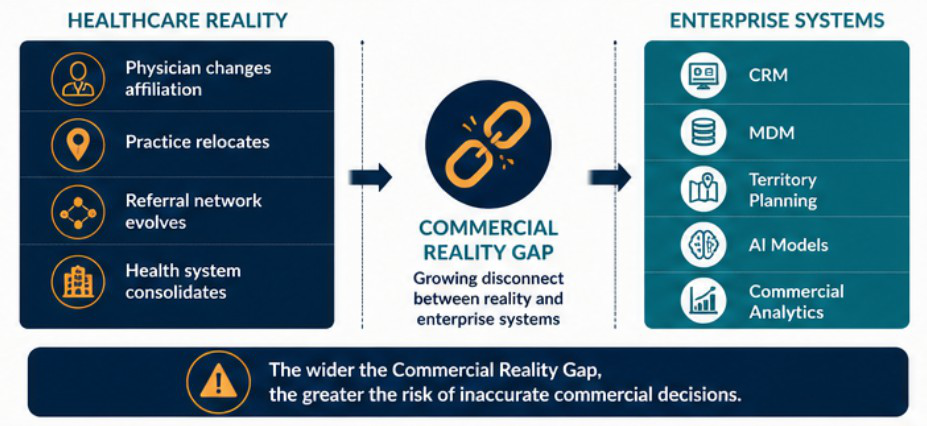
Figure 1: Commercial Reality Gap in Healthcare
As this gap widens, targeting models, AI recommendations, territory planning, and commercial analytics increasingly optimize against yesterday’s view of the market rather than today’s commercial reality.
PERCEPTIVE ANALYTICS PERSPECTIVE
Traditional HCP governance has focused on improving record quality through completeness, validation, and stewardship. While these capabilities remain essential, they no longer guarantee that commercial decisions accurately reflect the healthcare ecosystem. At Perceptive Analytics, we believe commercial leaders should begin measuring decision fidelity alongside data quality. The organizations that outperform in the AI era will be those that continuously synchronize HCP intelligence with commercial reality, ensuring every downstream decision is built on information that reflects the market as it exists today rather than as it existed
AI Doesn’t Create Bad Commercial Decisions
2.1 – AI Learns From Enterprise Data, Not Commercial Reality
Artificial intelligence is often viewed as the solution to commercial complexity. In practice, however, AI can only identify patterns within the data it receives. It has no inherent ability to determine whether that data accurately represents the current healthcare ecosystem.
When provider affiliations, practice locations, or account hierarchies are outdated, AI models continue to generate recommendations with confidence. The technology is functioning correctly, but it is optimizing against an increasingly inaccurate representation of the market.
This distinction is critical. AI does not introduce commercial errors. It systematically amplifies the quality and limitations of the enterprise data on which it is trained.
2.2 – The Hidden Cost Is Decision Drift
Most organizations monitor AI performance using metrics such as prediction accuracy, engagement rates, or campaign effectiveness. These indicators reveal whether a model is performing as expected, but they rarely indicate whether the underlying commercial assumptions remain valid.
As the Commercial Reality Gap widens, commercial decisions begin to experience Decision Drift. Territory prioritization becomes less relevant, HCP segmentation gradually loses precision, and next best action recommendations no longer align with how providers actually practice or influence care decisions.
Because this deterioration occurs incrementally, it often goes unnoticed. Commercial teams continue trusting AI outputs while the relevance of those recommendations steadily declines.
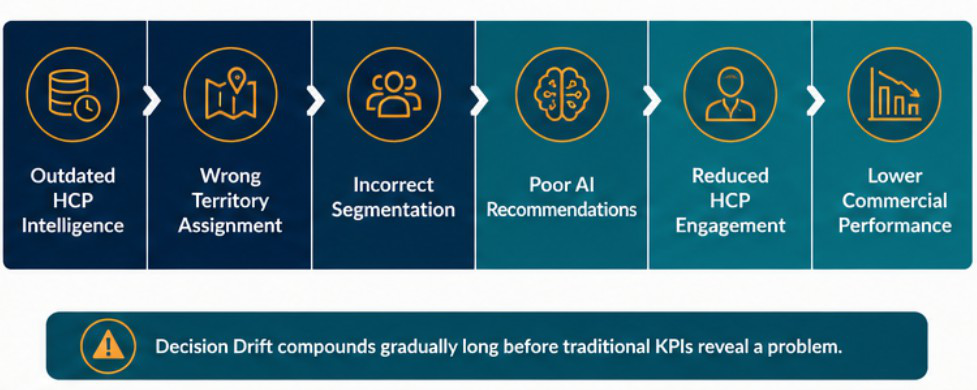
Figure 2: How Decision Drift propagates across commercial operations
2.3 – Better Algorithms Cannot Compensate for Outdated Intelligence
Organizations frequently respond to declining commercial performance by refining algorithms, introducing additional data features, or deploying newer AI models. While these initiatives may improve analytical sophistication, they do not address the underlying issue if enterprise HCP intelligence remains outdated.
An advanced model trained on stale provider relationships will consistently outperform a simpler model on historical validation datasets, yet still produce suboptimal recommendations in the real world. Improving analytical sophistication without improving data freshness simply increases confidence in decisions that may no longer reflect market conditions.
The competitive advantage therefore shifts from building increasingly complex AI models to ensuring that enterprise intelligence evolves at the same pace as the healthcare ecosystem.
2.4 – Trust in AI Depends on Trust in Data
As commercial organizations expand AI across targeting, omnichannel engagement, forecasting, and customer planning, confidence in algorithmic recommendations becomes a strategic asset. That confidence cannot be sustained unless leaders also trust the data ecosystem supporting every recommendation.
Building trustworthy AI therefore requires more than model governance. It requires continuous validation of the commercial intelligence feeding those models, ensuring that provider relationships, organizational structures, and market dynamics remain aligned with reality.
Organizations that trengthen this foundation will improve not only AI performance but also the consistency and reliability of commercial decision-making across the enterprise.
PERCEPTIVE ANALYTICS PERSPECTIVE
Many AI transformation programs prioritize model selection, infrastructure, and adoption while assuming enterprise data is sufficiently reliable. That assumption deserves greater scrutiny. Before investing in increasingly sophisticated commercial AI capabilities, organizations should evaluate whether the HCP intelligence supporting those models accurately reflects today’s provider ecosystem. The strongest AI strategies are built on continuously validated commercial intelligence, where improvements in data reliability and model performance advance together rather than independently.
From Master Data Management to Continuous HCP Intelligence
3.1 – Traditional Master Data Was Designed for Stability
Master Data Management (MDM) has long been the foundation of commercial operations in Life Sciences. By creating a single, trusted view of healthcare professionals, it enables consistent reporting, regulatory compliance, CRM integration, and cross-functional alignment.
However, most MDM programs were built to maintain consistency rather than continuously detect and respond to change. As the provider ecosystem becomes increasingly dynamic, a well-governed master record alone is no longer sufficient to support high-quality commercial decisions.
The objective is shifting from maintaining a trusted source of truth to maintaining a trusted representation of an evolving healthcare ecosystem.
3.2 – Continuous Intelligence Requires Continuous Validation
Closing the Commercial Reality Gap requires more than increasing the frequency of data refreshes. Organizations need mechanisms that continuously validate whether enterprise HCP intelligence still reflects real-world provider relationships.
This means monitoring signals such as affiliation changes, new practice locations, health system restructuring, referral network evolution, and changes in prescribing or care delivery patterns. These signals should trigger validation workflows before they begin influencing commercial decisions.
Rather than treating data quality as a scheduled governance activity, leading organizations are embedding continuous verification into their commercial data operating model.
3.3 – Commercial Intelligence Must Become an Operational Capability
The next generation of HCP intelligence will rely on a coordinated operating model where data stewardship, commercial operations, analytics, and AI governance work as an integrated capability rather than independent functions.
Organizations looking to operationalize this approach can explore how Perceptive Analytics’ Pharma Commercial Analytics & Business Intelligence solutions help life sciences companies unify HCP intelligence, commercial analytics, and AI-driven decision-making across the commercialization lifecycle.
Instead of periodic corrections flowing through disconnected systems, validated changes should propagate seamlessly across CRM platforms, customer 360 environments, territory models, segmentation engines, and AI applications. This ensures every commercial function operates from the same current understanding of the market.
The competitive advantage no longer comes from owning more HCP data. It comes from updating enterprise intelligence faster than the market changes.
3.4 – The Future Belongs to Adaptive Commercial Intelligence
As AI becomes embedded across commercial planning and customer engagement, organizations will increasingly differentiate themselves by the speed at which commercial intelligence adapts to market change.
This evolution represents a shift from static enterprise records to adaptive intelligence systems that continuously observe, validate, and distribute trusted HCP information across the commercial ecosystem.
Organizations that embrace this approach will reduce decision drift, improve AI reliability, and strengthen commercial agility in an environment where provider ecosystems continue to evolve.
PERCEPTIVE ANALYTICS PERSPECTIVE
Many organizations view HCP intelligence as a support function for CRM and reporting. Increasingly, it should be treated as a strategic commercial capability with direct influence on AI effectiveness, field force productivity, omnichannel engagement, and customer planning. Leadership teams should evaluate whether their current operating model is designed to respond to continuous ecosystem change or simply maintain historical data quality. The organizations that close the Commercial Reality Gap will be those that institutionalize continuous HCP intelligence as part of their commercial operating model rather than as an extension of traditional master data management.
The Commercial Reality Gap Doesn’t Damage Data. It Erodes Commercial Decisions
4.1 – Decision Drift Begins Before Anyone Notices
Commercial systems rarely fail overnight. Instead, the impact of outdated HCP intelligence accumulates gradually as provider relationships evolve while enterprise records remain unchanged. Because these changes occur incrementally, the deterioration is often difficult to detect through routine operational reviews.
This gradual divergence creates Decision Drift, where commercial decisions become progressively less aligned with the healthcare ecosystem despite no visible decline in system performance. The models continue to run, dashboards continue to refresh, and campaigns continue to execute. What changes is the relevance of the decisions being made.
For commercial leaders, this makes Decision Drift far more challenging than conventional data quality issues. By the time declining outcomes become visible, the underlying disconnect may have existed for months.
4.2 – Every Commercial Function Inherits the Same Disconnect
HCP intelligence sits at the centre of nearly every commercial workflow. Sales targeting, territory alignment, omnichannel engagement, account planning, forecasting, incentive design, and customer analytics all depend on the same enterprise representation of the provider ecosystem.
When that representation falls behind reality, the impact is rarely isolated to a single function. An outdated affiliation can influence territory assignments, alter account hierarchies, affect customer segmentation, and ultimately change which healthcare professionals receive commercial attention.
The Commercial Reality Gap therefore acts as a shared source of risk. A single inconsistency can propagate across multiple systems, creating downstream effects that extend far beyond the original data change.
4.3 – Traditional Performance Metrics May Not Reveal the Problem
Commercial organizations typically evaluate performance using activity and outcome metrics such as call coverage, campaign engagement, model accuracy, or sales execution. While these indicators remain valuable, they primarily measure how effectively commercial processes are operating.
They do not answer a more fundamental question: Are those processes operating on an accurate understanding of today’s healthcare ecosystem?
As a result, organizations can report healthy operational metrics while commercial intelligence steadily loses relevance. High-performing execution cannot compensate for decisions based on outdated assumptions.
4.4 – The Strategic Risk Is Declining Decision Confidence
The long-term consequence of Decision Drift is not simply lower campaign effectiveness or reduced targeting precision. It is a gradual decline in confidence in the information that supports commercial planning.
When field teams question account assignments, marketing teams challenge audience selection, or commercial leaders rely on manual validation before acting on AI recommendations, decision-making becomes slower, less consistent, and increasingly reactive.
Reducing the Commercial Reality Gap is therefore about more than improving data quality. It is about preserving confidence in enterprise decision-making as the healthcare ecosystem continues to evolve.
PERCEPTIVE ANALYTICS PERSPECTIVE
The maturity of a commercial organization should not be judged solely by the sophistication of its AI models or analytics platforms. An equally important indicator is how confidently leaders can rely on the decisions those systems produce. As commercial ecosystems become more dynamic, reducing Decision Drift should become a strategic objective. Organizations that continuously validate the intelligence underpinning commercial decisions will be better positioned to maintain targeting precision, planning consistency, and trust in AI-enabled decision-making, even as market conditions evolve.
Leading Commercial Organizations Are Moving Beyond Traditional HCP Master Data
5.1 – HCP Data Is Becoming a Strategic Commercial Asset
Forward-looking Life Sciences organizations are changing how they view HCP intelligence. Instead of treating provider data as a support function for CRM and compliance, they increasingly recognize it as a strategic asset that influences every commercial decision.
This shift is changing investment priorities. Data quality initiatives are no longer evaluated solely by governance outcomes, but by their ability to improve targeting precision, customer engagement, forecasting accuracy, and AI readiness across the commercial organization.
The focus is moving from maintaining accurate records to enabling accurate commercial execution.
5.2 – Continuous Intelligence Requires Cross-Functional Ownership
Maintaining current HCP intelligence cannot remain the responsibility of a single data stewardship or master data management team. Commercial operations, analytics, sales, marketing, medical affairs, and IT all consume and contribute to the same provider intelligence.
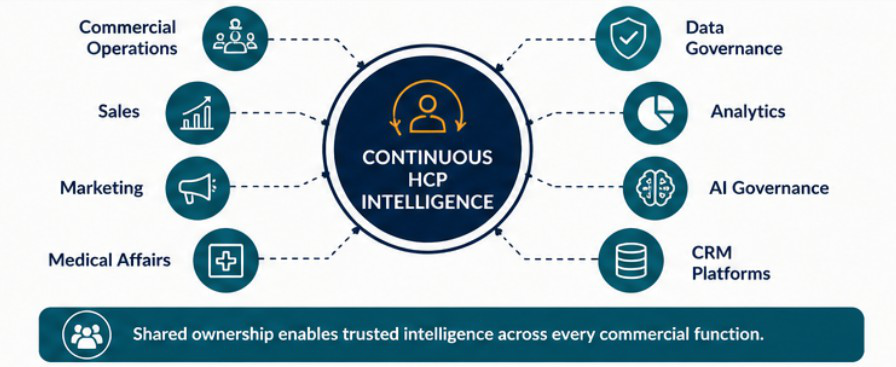
Figure 3: Continuous HCP Intelligence operating model
Leading organizations are therefore establishing shared ownership models where commercial teams help identify changes, governance teams validate them, and technology platforms distribute trusted updates consistently across enterprise applications.
This collaborative approach reduces delays while ensuring that every commercial function works from the same trusted view of the healthcare ecosystem.
5.3 – Technology Alone Will Not Close the Commercial Reality Gap
Many organizations respond to growing data challenges by investing in new data platforms, AI capabilities, or external data providers. While these technologies improve scalability, they cannot independently resolve stale or inconsistent commercial intelligence.
Success depends on combining technology with governance, validation workflows, clearly defined ownership, and continuous monitoring. Without these capabilities, even the most advanced platforms simply process outdated information more efficiently.
Competitive advantage comes from strengthening the operating model surrounding commercial intelligence, not just the technology stack supporting it.
5.4 – Competitive Advantage Will Be Defined by Intelligence Agility
As commercial strategies become increasingly AI-enabled, the speed at which organizations detect and respond to market change will become a differentiator. Enterprises that can rapidly identify provider changes, validate their commercial impact, and distribute trusted intelligence across business functions will make better decisions with greater consistency.
This capability creates a compounding advantage. Better intelligence improves AI recommendations, strengthens commercial planning, enhances customer engagement, and builds greater confidence in enterprise decision-making.
In the coming years, intelligence agility may prove just as important as analytical sophistication in determining commercial performance.
PERCEPTIVE ANALYTICS PERSPECTIVE
Commercial excellence increasingly depends on how quickly enterprise intelligence adapts to market change. Organizations that embed continuous validation, shared accountability, and decision-focused governance into their operating model will be better equipped to support AI-driven commercialization at scale. Rather than asking “How accurate is our HCP data?”, executive teams should begin asking “How quickly can our commercial intelligence adapt when the market changes?” That question is likely to define the next stage of competitive differentiation.
Building a Continuous HCP Intelligence Operating Model
6.1 – Build for Continuous Change, Not Periodic Updates
Many commercial data strategies are still designed around scheduled refresh cycles. While these approaches support governance and operational consistency, they struggle to keep pace with an ecosystem where provider relationships evolve continuously.
Leading organizations are redesigning their operating models around continuous observation and validation. The objective is not to eliminate every data discrepancy, but to reduce the time between a real-orld change and its availability for commercial decision-making.
This shift enables commercial teams to respond to market changes while they are still strategically relevant rather than after opportunities have already been missed.
6.2 – Integrate Intelligence Across the Commercial Ecosystem
The value of accurate HCP intelligence is realized only when it is consistently reflected across every commercial platform. Updating a master record alone delivers limited benefit if CRM systems, territory models, analytics platforms, and AI applications continue operating on different versions of the same provider.
A connected intelligence ecosystem ensures validated changes propagate seamlessly across commercial functions. This reduces conflicting information, improves planning consistency, and enables every team to work from the same representation of the healthcare ecosystem.
The outcome is greater alignment across sales, marketing, commercial operations, medical affairs, and analytics.
6.3 – Measure Decision Readiness Alongside Data Quality
Traditional governance metrics such as completeness, duplication rates, or validation accuracy remain important. However, they provide limited visibility into whether commercial intelligence is actually supporting better business decisions.
Organizations should complement these measures with indicators that assess decision readiness, such as the timeliness of critical updates, synchronization across commercial systems, and the speed at which validated changes become available for operational use.
These measures provide leadership with a more meaningful view of whether commercial intelligence is enabling effective execution.
6.4 – The Next Competitive Advantage Will Be Intelligence Resilience
Commercial AI will continue to evolve, but its long-term value will depend on the resilience of the intelligence ecosystem supporting it. Organizations that can continuously absorb change without compromising decision quality will be better positioned to adapt to new market conditions, organizational shifts, and evolving customer expectations.
This capability extends beyond technology. It reflects an enterprise’s ability to maintain trusted commercial intelligence despite constant disruption within the healthcare ecosystem.
As the industry moves toward increasingly AI-enabled commercialization, intelligence resilience will become a defining characteristic of high-performing commercial organizations.
PERCEPTIVE ANALYTICS PERSPECTIVE
Organizations often view HCP intelligence as a foundational capability that supports commercial execution. Increasingly, it should be viewed as a dynamic capability that shapes commercial outcomes. Building a continuous intelligence operating model requires more than improving data quality processes. It demands governance that prioritizes business relevance, technology that enables rapid synchronization, and performance measures that evaluate how effectively commercial intelligence supports enterprise decision-making. When these elements work together, HCP intelligence becomes a source of sustained competitive advantage rather than a static operational asset.
Case Study: HCP Data in Practice
The strategic importance of continuously managed HCP intelligence is already evident in organizations that have modernized their commercial data foundations. The following enterprise implementations illustrate how leading Life Sciences companies are reducing data latency, improving customer intelligence, and strengthening commercial execution through measurable operational improvements.
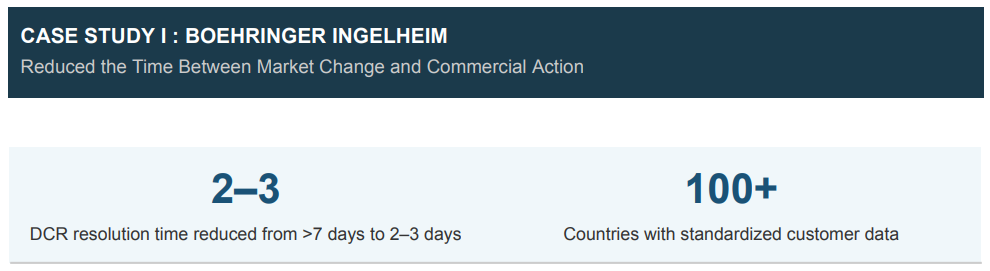
As Boehringer Ingelheim expanded its commercial operations, fragmented master data management slowed the flow of trusted HCP reference data into CRM systems. Multiple data repositories, lengthy data change request (DCR) cycles, and inconsistent customer records reduced field confidence and delayed commercial execution.
To modernize its commercial data foundation, the company implemented Veeva OpenData and Veeva Network MDM, creating a connected customer data environment. According to Boehringer Ingelheim, this reduced DCR resolution times from more than one week to just two or three days, improving the speed at which validated HCP information reached commercial teams. More recently, the company also announced the standardization of customer data across 100+ countries, creating a unified customer view to support coordinated engagement and future AI initiatives.
Key takeaway: The case demonstrates that competitive advantage comes not only from maintaining accurate HCP data but from shortening the time between a market change and its availability for commercial decision-making.
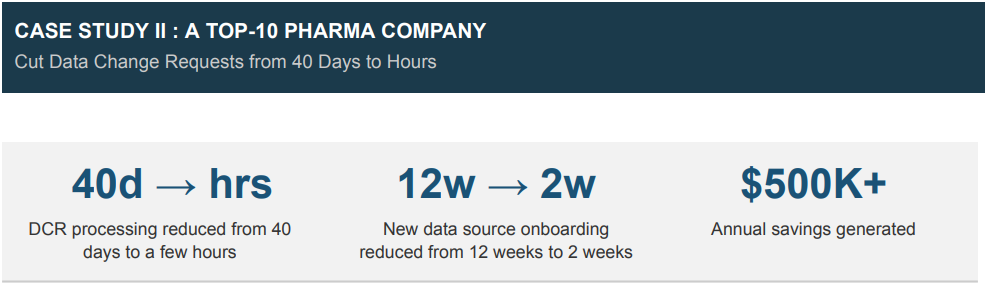
A global Top-10 pharmaceutical company struggled with fragmented customer data sourced from multiple systems. Conflicting customer records, slow master data cycles, and delayed data change requests limited commercial agility and reduced confidence in HCP intelligence.
The organization implemented a unified customer data strategy centered on integrated master data management and managed reference data. According to the published case study, the transformation reduced data change request processing time from 40 days to just a few hours, reduced onboarding time for new data sources from 12 weeks to 2 weeks, linked 21 enterprise data sources, and generated more than $500,000 in annual savings.
Key takeaway: This illustrates that accelerating the flow of trusted HCP intelligence improves not only data governance but also commercial responsiveness. As the Commercial Reality Gap narrows, downstream activities such as targeting, segmentation, and field execution become more reliable.
CONCLUSION
Commercial AI will not succeed simply because organizations deploy more advanced models. Its effectiveness will increasingly depend on whether enterprise data continues to reflect a healthcare ecosystem that is changing faster than ever before. As physician affiliations, care delivery models, and referral networks evolve, the gap between commercial reality and enterprise understanding becomes a strategic business risk rather than a data management issue.
The organizations that lead over the next decade will distinguish themselves by treating HCP intelligence as a continuously evolving strategic capability. Those that continue relying on periodic data refreshes risk widening the Commercial Reality Gap, allowing Decision Drift to undermine targeting precision, customer engagement, forecasting accuracy, and commercial performance without obvious warning signs.
Building this capability requires more than modern technology. It demands an operating model that continuously validates customer intelligence, aligns commercial data with market reality, and enables AI to make decisions based on current evidence rather than historical assumptions.
Perceptive Analytics partners with Life Sciences organizations to build scalable commercial intelligence foundations that improve HCP data quality, strengthen AI readiness, and enable better commercial decisions through advanced analytics and domain expertise. If your organization is looking to modernize HCP intelligence, optimize commercial operations, or improve AI-driven targeting, explore our Pharma Commercial Analytics solutions or book a free Data & Analytics Consultation to discuss your commercialization priorities with our experts.
“The next competitive advantage will not come from knowing more about physicians.
It will come from maintaining the most accurate, continuously evolving representation of commercial reality.”
Sources and Methodology
All statistics in this briefing are drawn from the following primary research, surveys, regulatory publications, consulting reports and enterprise case studies, verified at the time of writing. Sources marked with an asterisk (*) have been independently cross-verified against at least one secondary source for figures cited in this document.
Primary Sources
- Health Affairs Scholar *
- American Journal of Managed Care (AJMC) *
- S. Government Accountability Office (GAO) *
- IQVIA Institute
- Veeva customer case studies
- PubMed indexed research
Peer-reviewed Literature
- Health Affairs Scholar
- American Journal of Managed Care
- PubMed
- Relevant peer-reviewed healthcare services research cited throughout the article
Industry Reports
- IQVIA Institute
- Veeva OpenData customer documentation
- Veeva Network
Enterprise Case Studies
- Boehringer Ingelheim commercial customer data transformation
- Alnylam Pharmaceuticals commercial launch data foundation
- Global Top-10 Pharmaceutical Company (anonymous Veeva customer case study)
Methodology Notes
This briefing was developed using a structured research methodology that combined peer-reviewed literature, regulatory publications, industry reports, and publicly documented enterprise implementations. Evidence was prioritized based on source credibility, publication recency, implementation detail, and relevance to commercial data management in Life Sciences. Key findings were cross-verified across multiple independent sources wherever possible, while areas with limited public evidence were identified accordingly. The executive insights presented in this article were synthesized by connecting recurring themes across multiple sources rather than relying on any single publication.