
Choosing Data Ownership Based on Decision Impact
Analytics | January 19, 2026


This article examines when centralized data ownership stops scaling, when decentralization becomes necessary, and why a hybrid approach often works best.
Executive Summary
Despite growing interest in decentralized and data mesh models, research shows that nearly two-thirds of enterprises still operate with predominantly centralized data ownership, while analyst estimates suggest only around 25 percent will adopt decentralization at meaningful scale. This gap exists because decentralization is not inherently superior. Centralized models continue to deliver efficiency and trust until organizational complexity makes coordination economically inefficient. Decentralization creates value only beyond that inflection point. The core takeaway for CXOs is to treat data ownership as a scale and economics decision, not a modernization mandate.
Speak with our consultants today. Book a session with our BI experts now.
Perceptive Analytics POV
We suggest treating data ownership as a scale-driven operating model decision rather than a binary architectural choice. Centralized ownership remains effective until coordination overhead consistently slows decision-making and weakens business responsiveness. Decentralization becomes necessary only when domain-level speed materially affects outcomes. In most enterprises, we recommend a hybrid approach, where centralized ownership is retained for enterprise-critical data while high-velocity, domain-specific data products are decentralized.
Learn more: Prioritizing Dashboard Rollouts: A Data-Driven Guide
When Centralization Stops Scaling and Decentralization Starts Creating Value
Centralized data ownership works well when analytical demand is predictable, metrics are largely shared across the enterprise, and decision cycles are periodic rather than continuous. In these environments, centralized teams reduce duplication, enforce common definitions, and deliver economies of scale.
The inflection point emerges as organizational complexity increases. As more domains require analytics tailored to specific operational contexts, centralized teams begin absorbing coordination overhead rather than delivering insights. Prioritization queues grow, time-to-insight increases, and analytics becomes detached from execution. This is typically when business teams create shadow pipelines, introducing informal decentralization and undermining trust.
Decentralization starts creating value only after this threshold is crossed. When domains are sufficiently mature and accountable for outcomes tied to revenue, risk, or customer experience, domain ownership materially improves speed and relevance. Before that point, decentralization redistributes effort and raises operating cost without improving decisions.
The distinction is economic, not architectural. What we see consistently at Perceptive Analytics is that this inflection point is rarely triggered by data volume or tooling limits. It appears when coordination effort begins to outweigh the value of centralized control.
Explore more: Answering Strategic Questions Through High-Impact Dashboards
The Cost of Control vs the Cost of Speed in Ownership Models
Centralized ownership concentrates accountability, which simplifies quality control, compliance, and enterprise alignment. Its limitation is scalability. As demand diversifies, centralized teams risk becoming approval bottlenecks, slowing execution even when technology is capable.
Decentralized ownership improves responsiveness by moving data closer to decision-makers, but it expands the operational surface area. Organizations encounter duplicated pipelines, inconsistent definitions, uneven data quality, and higher integration overhead. Research and early enterprise adoption patterns consistently show that these costs are underestimated, leading to higher complexity without proportional gains in speed.
Neither model is flawed by design. Each fails when applied beyond its natural operating limits.
Read more: Data Transformation Maturity: Choosing the Right Framework for Enterprise Reliability
A Practical Decision Guide for CXOs
Rather than debating architectures, leaders should evaluate data ownership models using outcome-driven questions:
● Which decisions truly require domain-level speed, and which depend on enterprise consistency?
● Is central slowdown caused by structural overload or by prioritization and resourcing choices?
● Do domains have the capability and incentives to own data products responsibly?
● Will faster decision cycles offset higher operating and integration costs?
● Will this ownership model remain effective as organizational complexity doubles?
Organizations that answer these questions explicitly avoid ideological shifts and choose models aligned to business reality.
Talk with our consultants today. Book a session with our experts now
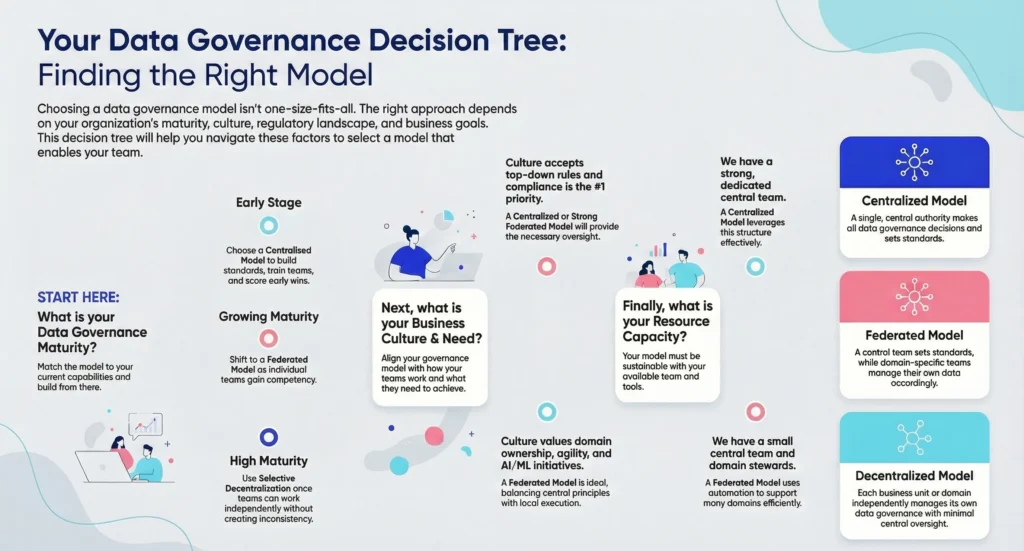
Fig 1. Data Governance Models Explained With Examples: Emily Winks
Industry Learnings: Balancing Central Leverage and Domain Speed
GoDaddy’s data organization was originally built around a centralized data platform, where shared datasets and analytics pipelines were owned by a core team. This model worked while data demand and product complexity were moderate. As GoDaddy scaled across products, regions, and customer segments, centralized ownership became a bottleneck.
To address this, GoDaddy transitioned to a data mesh-inspired model, decentralizing ownership of key datasets to domain teams while retaining centralized control over shared infrastructure and governance policies. According to GoDaddy’s published architecture case study, this shift reduced data replication, improved data discoverability, and accelerated analytics access. The outcome was not full decentralization, but a hybrid ownership model applied selectively, not universally.
Conclusion
Decentralization is not the next step for every organization. It is a response to scale-driven failure in centralized ownership. CXOs should resist trend-led shifts and decentralize only when coordination cost clearly exceeds the value of control. Data ownership must be treated as an evolving operating model decision, anchored in business economics rather than architectural fashion. This is a pattern we consistently observe at Perceptive Analytics.
Frequently Asked Questions
What is data ownership in enterprise analytics?
Data ownership refers to the responsibility and authority assigned to teams or individuals for managing data assets, including their quality, availability, governance, and usage. In enterprise analytics, data ownership defines who is accountable for maintaining datasets, ensuring consistent definitions, and supporting data-driven decisions across the organization.
What is the difference between centralized and decentralized data ownership?
Centralized data ownership places responsibility for data management within a single enterprise data team. This model promotes consistent definitions, governance, and efficient data management. Decentralized ownership distributes responsibility to domain teams that manage their own datasets and analytics pipelines. While centralized models improve consistency and control, decentralized models can improve speed and domain-specific insight when organizations become more complex.
What is a hybrid data ownership model?
A hybrid data ownership model combines centralized governance with decentralized domain ownership. In this structure, a central data team manages shared infrastructure, enterprise standards, and governance policies, while domain teams own specific datasets and analytics products relevant to their business functions. This approach allows organizations to balance enterprise consistency with operational agility.
Why do many companies adopt hybrid data ownership models?
Many enterprises adopt hybrid data ownership models because they provide the benefits of both centralized and decentralized approaches. Central governance ensures consistent definitions, data quality, and compliance, while domain ownership allows teams closer to the business to build and maintain analytics products quickly. This balance helps organizations scale analytics without creating operational bottlenecks or fragmented data systems.