
Architectural Rigidity Is Draining Your Analytics ROI
Analytics | April 8, 2026


How Recurring Rebuild Cycles Quietly Erode Cost Efficiency and Decision Velocity
Executive Summary
Enterprise data platforms are losing ROI not because of scale, but because of architectural rigidity. Fixed schemas and tightly coupled transformation logic trigger recurring rebuild cycles as the business evolves, shifting engineering capacity from innovation to correction.
These cycles introduce hidden costs through metric revalidation, audit rework, stakeholder retraining, and reporting disruption, slowing decision velocity. The issue is not tooling sophistication but the absence of governed schema evolution and modular design that allow additive change without systemic impact.
If growth repeatedly demands structural redesign, architecture is misaligned with strategy. CXOs must treat adaptability as a financial control mechanism to protect analytics ROI and competitive speed.
Speak with our consultants today. Book a session with our BI experts now.
Reclaim Architectural Authority Before Volatility Escalates: Perceptive Analytics POV
If volatility reaches executive escalation, architecture has failed to contain it. Rebuild cycles rarely originate from business unpredictability alone. They stem from rigid design choices that embed schema logic and metric definitions too deeply within transformation layers. Even incremental change then requires structural intervention.
CXOs should mandate:
Clear separation of storage, transformation mechanics, and semantic interpretation.
Formal schema evolution standards with version control.
Impact transparency before structural change.
Architectural authority must sit within the platform through defined evolution protocols. Growth should be absorbed systematically, not converted into cost spikes and slowed decisions.
Learn more: Prioritizing Dashboard Rollouts: A Data-Driven Guide
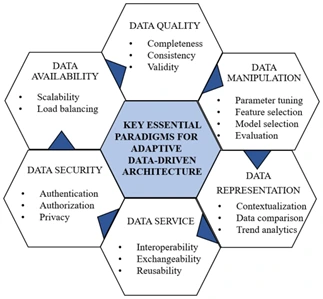
Rebuild Cycles Are a Structural Signal, Not an Operational Coincidence
If growth repeatedly forces redesign, the architecture is structurally misaligned with strategy. Rebuilds are often positioned as modernization milestones. In reality, they correct earlier assumptions of stability that no longer reflect the operating model.
Early platform design typically encodes a contained view of:
Products and revenue structures.
Pricing and margin logic.
Regulatory and reporting requirements.
Organizational hierarchies and ownership models.
That containment drives short-term efficiency. It also hardens structural assumptions into the data model. Instability emerges when the enterprise expands. Common stress triggers include:
Introduction of new revenue constructs or monetization models.
Expansion into new regulatory environments.
Acquisition of entities with incompatible definitions.
Advanced analytics requiring cross-domain relationships.
If the architecture lacks formal evolution pathways, these pressures cannot be isolated. Schema adjustments cascade across transformation layers, semantic definitions, and downstream reporting assets. What should be additive enhancement becomes systemic reset.
Rebuild cycles therefore signal something deeper than operational complexity. They expose rigidity embedded in foundational design choices that were never engineered to tolerate sustained change.
Explore more: Answering Strategic Questions Through High-Impact Dashboards
The Rigidity Exposure Framework
Architectural rigidity is diagnosable across five structural dimensions. Perceptive Analytics provides this framework to solve rigidity in your architecture:
Coupling Exposure: Business rules embedded directly in transformation pipelines increase systemic fragility. Minor logic shifts require coordinated structural rewrites.
Schema Evolution Discipline: Additive and breaking changes must be explicitly classified and governed. Without standards, schema updates propagate unpredictably.
Semantic Version Control: Metric definitions must be version controlled. Overwriting definitions erodes continuity, audit clarity, and trust.
Dependency Concentration: Tightly bound downstream models amplify upstream change. Localized updates become enterprise disruption.
Governance Maturity: Reactive approval escalates volatility. Proactive evolution management contains it within the platform.
Weakness across several of these dimensions indicates that rebuild cycles are structurally programmed outcomes.
Read more: Data Transformation Maturity: Choosing the Right Framework for Enterprise Reliability
The Economic Contrast: Rigid vs Adaptive Architecture
The financial divergence between rigidity and adaptability compounds over time.
| Dimension | Rigid Architecture | Adaptive Architecture |
|---|---|---|
| Engineering Allocation | Capacity absorbed by redesign and correction | Capacity focused on new value creation |
| Change Pattern | Periodic structural resets | Continuous governed evolution |
| Metric Stability | Revalidation cycles and trust erosion | Stable continuity with transparent versioning |
| Budget Behavior | Investment spikes tied to rebuild events | Evenly distributed engineering investment |
| Strategic Speed | Slows during structural transitions | Sustained during expansion |
Rigid systems convert growth into cost volatility. Adaptive systems convert growth into expanding capability and compounding ROI.
Can Your Architecture Absorb Change Without Resetting?
Adaptability must be engineered as structural discipline, not episodic modernization. Preventing rebuild culture requires institutional controls at the platform layer:
Separate storage, transformation mechanics, and semantic interpretation.
Formalize schema evolution standards with additive and breaking classifications.
Enforce version-controlled business definitions.
Preserve backward compatibility wherever feasible.
Introduce transparent deprecation timelines before structural shifts.
These controls reposition volatility inside the architecture, where it can be governed systematically. Engineering effort shifts from structural correction to strategic enablement, preserving decision velocity during expansion.
Conclusion
Recurring rebuild cycles are architectural liabilities, not inevitable growth costs. As highlighted in Revisiting data architecture for next gen data products published in October 2024 by McKinsey & Company, enterprises must rethink foundational design to support evolving data products.
CXOs should initiate a structural audit to identify embedded rigidity and mandate governed schema evolution at the platform layer. Organizations that institutionalize managed adaptability will protect analytics ROI, sustain decision velocity, and convert volatility into strategic advantage rather than recurring correction.
Talk with our consultants today. Book a session with our experts now