
Can Your Data Architecture Survive Global Privacy Regulations
Analytics | April 8, 2026


Embedding Privacy Controls Directly into the Data Layer
Executive Summary
Privacy regulation is rapidly fragmenting across regions, with frameworks such as GDPR, CCPA, and PIPEDA redefining how organizations must govern personal data. Many enterprises still rely on BI-level masking or application-layer access controls, which fail to prevent sensitive data exposure across APIs, machine learning models, or exported datasets.
The more scalable solution is privacy-preserving analytics embedded directly into the data architecture. By implementing tokenization, column-level access policies, and dynamic masking at the storage layer, organizations ensure that analytics platforms, AI systems, and APIs automatically inherit the same protection model.
This architectural shift reduces compliance risk while enabling organizations to scale analytics across jurisdictions with confidence.
Speak with our consultants today. Book a session with our experts now.
Privacy Is Now a Data Architecture Responsibility: A Perceptive Analytics POV
Privacy regulation is evolving faster than enterprise data governance models. Frameworks such as GDPR, CCPA, and PIPEDA already impose strict requirements on personal data handling, while new regional policies continue to emerge.
According to Gartner, a majority of organizations still rely on application-layer privacy controls, which leave significant exposure across data pipelines, APIs, and machine learning workflows. Perceptive Analytics recommends that CXOs treat privacy as a foundational architectural capability rather than a governance overlay.
Embedding privacy enforcement directly into the storage and semantic layers ensures that analytics tools, AI models, and APIs inherit consistent protection automatically, reducing governance complexity while enabling secure global data expansion.
Learn more: Data Observability as Foundational Infrastructure for Enterprise Analytics
BI-Level Masking Creates the Illusion of Privacy
Most enterprises still implement privacy controls at the analytics or application layer, assuming this approach adequately protects sensitive information. In reality, these mechanisms only control what users see within dashboards and applications. They do not govern how data moves through pipelines, machine learning models, or APIs.
This architectural gap creates several structural risks:
BI-level masking does not protect data pipelines, where raw datasets remain accessible through query engines or exports.
Machine learning models can indirectly expose PII, even when dashboards hide sensitive attributes.
APIs and application integrations often bypass BI governance layers entirely.
Derived datasets may still contain identifiable attributes, even when source dashboards appear masked.
As a result, many organizations operate in a state of perceived compliance rather than actual protection. Governance policies appear to exist, yet the underlying data architecture still allows sensitive information to propagate across the ecosystem.
Learn more: Future-Proof Cloud Data Platform Architecture
Real Privacy Requires Controls at the Storage Layer
The only reliable way to ensure privacy across modern data ecosystems is to embed governance within the storage and semantic layers of the data platform. When privacy policies exist at this level, every system interacting with the data automatically inherits the same protection framework.
Several architectural mechanisms enable this model:
Dynamic Data Masking at Query Runtime: Sensitive attributes are masked dynamically depending on the querying user’s authorization level. Applications do not need custom logic because masking occurs directly within the query engine.
Column-Level RBAC Policies: Fine-grained access policies applied to specific columns ensure that sensitive identifiers cannot be accessed without explicit authorization, regardless of the analytics tool used.
Tokenization of PII at Ingestion: Sensitive identifiers are replaced with tokens as data enters the platform. De-tokenization occurs only in authorized contexts, significantly reducing exposure across analytical workflows.
Together, these mechanisms transform privacy from a governance policy into a structural property of the data architecture.
Differential Access Architectures Unlock Safe Analytics
A common concern among CXOs is that stronger privacy controls may limit analytical flexibility. Modern privacy-preserving architectures address this challenge through differential access tiers that separate analytical utility from identity-level exposure.
Privacy Access Tiers
| Access Tier | Users | Data Characteristics |
|---|---|---|
| Aggregated Analytics Views | Business analysts | Aggregated metrics without PII |
| Analytical Modeling Views | Data scientists | Tokenized identifiers |
| Controlled Raw Data Access | Platform engineers | Full datasets with restricted PII |
This structure allows the majority of analytical workloads to operate on privacy-safe datasets, while only a small number of authorized users can access sensitive attributes.
Explore more: Enterprise Data Platform Architecture Orchestration Transition
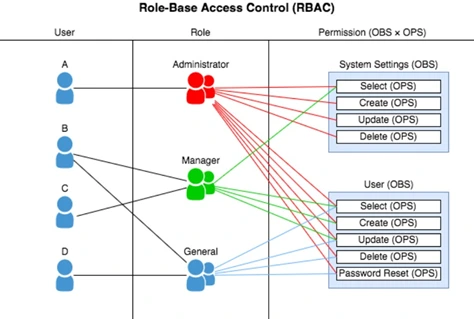
Case Study: A global fintech company implemented this approach while expanding its analytics operations into Europe. Instead of redesigning pipelines to comply with GDPR, the organization introduced tokenization and tiered access policies during data ingestion. The result was regulatory alignment without slowing machine learning experimentation or analytics adoption.
The key insight is that privacy and analytics scalability become complementary outcomes when governance is embedded within architecture.
Global Expansion Requires Privacy-Aware Data Architecture
Regulatory environments are becoming increasingly fragmented, with different regions enforcing unique requirements related to data residency, consent management, and access governance. Organizations expanding internationally must therefore build architectures capable of enforcing region-specific policies automatically.
A privacy-aware data architecture typically incorporates:
Data residency-aware storage policies that route sensitive data to regionally compliant infrastructure.
Policy-driven access frameworks aligned with jurisdiction-specific regulations.
Centralized metadata governance to identify and track sensitive attributes across pipelines.
Companies that implement these capabilities early avoid costly reengineering efforts when entering new markets. Instead of retrofitting compliance controls, they operate with a data platform already designed for regulatory diversity.
Read more: Controlling Cloud Data Costs Without Slowing Insight Velocity
Conclusion
Privacy has become a core architectural requirement for modern data platforms. Organizations that enforce privacy controls within the data layer ensure that analytics, AI systems, and APIs inherit consistent protection automatically.
Research from McKinsey highlights that companies embedding trust and privacy directly into digital infrastructure are better positioned to scale across regulatory environments. CXOs should therefore prioritize privacy-preserving data architectures to support global expansion while maintaining secure and compliant analytics ecosystems.
Talk with our consultants today. Book a session with our experts now.