
One Architecture: From Data Fragmentation to AI Performance
Analytics | March 12, 2026


Executive Summary
Global spending on data and analytics is projected by IDC to surpass 400 billion dollars in the coming years, yet AI ROI remains inconsistent across industries. The constraint is not algorithm sophistication but architectural fragmentation. Duplicate storage layers, siloed pipelines, and inconsistent metric definitions inflate cost and erode trust. The enterprises converting AI investment into measurable business performance are those that standardize on one unified architecture that supports analytics, automation, and AI from the same governed datasets. Architecture discipline is now the primary driver of scalable AI outcomes.
Speak with our consultants today. Book a free 30-min session now
Perceptive Analytics POV
At Perceptive Analytics, we take a clear position: AI scale must follow architectural consolidation. Leading enterprises are standardizing on unified lakehouse architectures built on open table formats and governed semantic layers before expanding AI programs. Organizations that rationalize storage and eliminate workload specific duplication report 30-40% storage cost reductions and significantly shorter AI deployment cycles.
We recommend three enterprise mandates:
- Establish one governed storage foundation serving analytics, AI, and automation
- Standardize on open table formats to prevent vendor lock in and avoid rebuild cycles
- Implement a centralized semantic layer to ensure one version of business truth
Scaling AI without these foundations compounds cost and operational risk. Implementing them converts AI from isolated experimentation into enterprise infrastructure.
Read more: BI Governance for Enterprises: Centralized vs Decentralized
AI Performance Breaks Down When Data Is Fragmented
Most AI initiatives do not fail dramatically. They stall due to structural inefficiencies in the data layer.
Across many enterprises:
- BI teams operate curated warehouse environments
- Data science teams maintain separate ML platforms
- Automation initiatives replicate operational datasets
- Generative AI pilots extract independent data copies
This creates predictable consequences:
- Multiple versions of high value datasets across systems
- Escalating storage and compute costs with each new workload
- Conflicting outputs between dashboards and AI systems
- Engineering time diverted toward reconciliation instead of innovation
The bottleneck is architectural duplication. AI performance cannot exceed the discipline of the data foundation beneath it.
Learn more: Prioritizing Dashboard Rollouts: A Data-Driven Guide
Fragmentation Is a Margin and Speed Problem
Fragmented architecture is often framed as technical debt. In reality, it is a strategic cost issue.
When data is repeatedly copied and transformed across lakes, warehouses, and ML environments:
- Infrastructure spending compounds at scale
- Latency increases between insight and action
- Governance and lineage tracking become complex
- Compliance exposure expands
- Tool upgrades trigger large scale migration programs
Gartner research consistently indicates that organizations adopting platform oriented data strategies outperform siloed peers in digital execution speed and operational efficiency. Unified architecture compounds value. Fragmentation compounds overhead.
For CXOs, this directly affects margin, agility, and capital allocation.
Explore more: Answering Strategic Questions Through High-Impact Dashboards
Unified Architecture Enables Multi Workload Scale
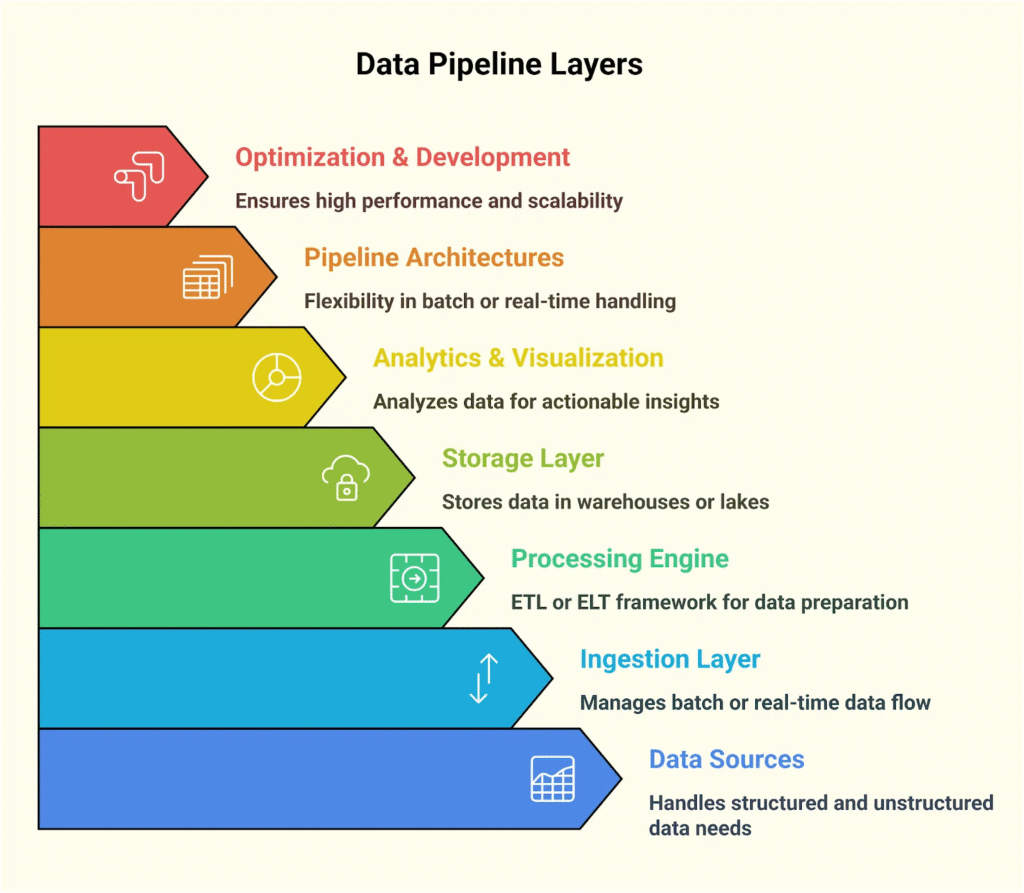
A modern unified architecture consolidates structured and unstructured data into a single governed storage layer while enabling independent compute engines to access the same datasets.
Core architectural enablers include:
- Open table formats such as Apache Iceberg and Delta Lake
- Transactional consistency across concurrent workloads
- Schema evolution without downstream disruption
- Separation of storage and compute for elastic scaling
Business outcomes include:
- BI, ML, automation, and AI systems operating on identical datasets
- Tool changes no longer requiring data migration programs
- Faster launch of new AI use cases
- Infrastructure scaling aligned with demand rather than duplication
Architecture becomes stable while innovation accelerates.
Semantic Governance Turns Data Availability Into Executive Trust
Even unified storage cannot deliver ROI without consistent business definitions. AI systems amplify inconsistencies in revenue, margin, risk, or customer classifications.
Without semantic governance:
- AI outputs contradict executive dashboards
- Automated workflows require manual intervention
- Confidence in AI driven decisions declines
Best practice requires:
- A centralized semantic layer defining enterprise metrics once
- Consistent metric consumption across BI, automation, and AI
- Embedded lineage and audit capabilities
- Clear enterprise ownership of core business definitions
When semantics are governed centrally, AI moves from experimentation to operational reliability.
Conclusion: Architecture Is the Real AI Strategy
The next wave of competitive advantage will not be determined by who pilots the most AI tools. It will be determined by who builds the most scalable and governed data foundation beneath them. Enterprises that unify storage, standardize formats, and enforce semantic consistency will reduce structural cost, accelerate AI deployment, and increase trust in automated decisions. Those that do not will continue to fund duplication while struggling to scale.
Talk with our consultants today. Book a free 30-min session now